Tokyo is enormous, and Western Tokyo is where it really earns that reputation. Shibuya, Shinjuku, Harajuku — these are the neighbourhoods that show up in every Tokyo mood board, every travel video, every “you have to go to Japan” conversation. They’re famous for good reason, and they’re genuinely as intense as advertised.
But here’s the thing about Western Tokyo that nobody really prepares you for: it also contains one of the most peaceful Shinto shrines in the entire country. Meiji Jingu sits inside 70 hectares of dense, quiet forest — and that forest is bordered on multiple sides by some of the busiest roads in Asia. You walk through the torii gate and the city just… stops. It’s the kind of contrast that sounds like a travel writer exaggerating, but it’s real, and it makes the perfect way to start a day that ends in Shinjuku’s neon chaos. Go in that order — forest first, city second — and the whole day feels like a story with a proper arc.
Overview
| Base hotel | Shinjuku or Shibuya are ideal — both put you in the middle of the action |
| Getting around | Almost entirely walking, with short metro hops if needed. Yamanote Line connects all three areas. IC card required. |
| Best season | Year-round. Meiji Jingu is spectacular in autumn and during New Year, when it hosts the most-visited shrine event in Japan. |
Attraction 1: Meiji Jingu Shrine + Harajuku
Morning · Allow 2–3 hours
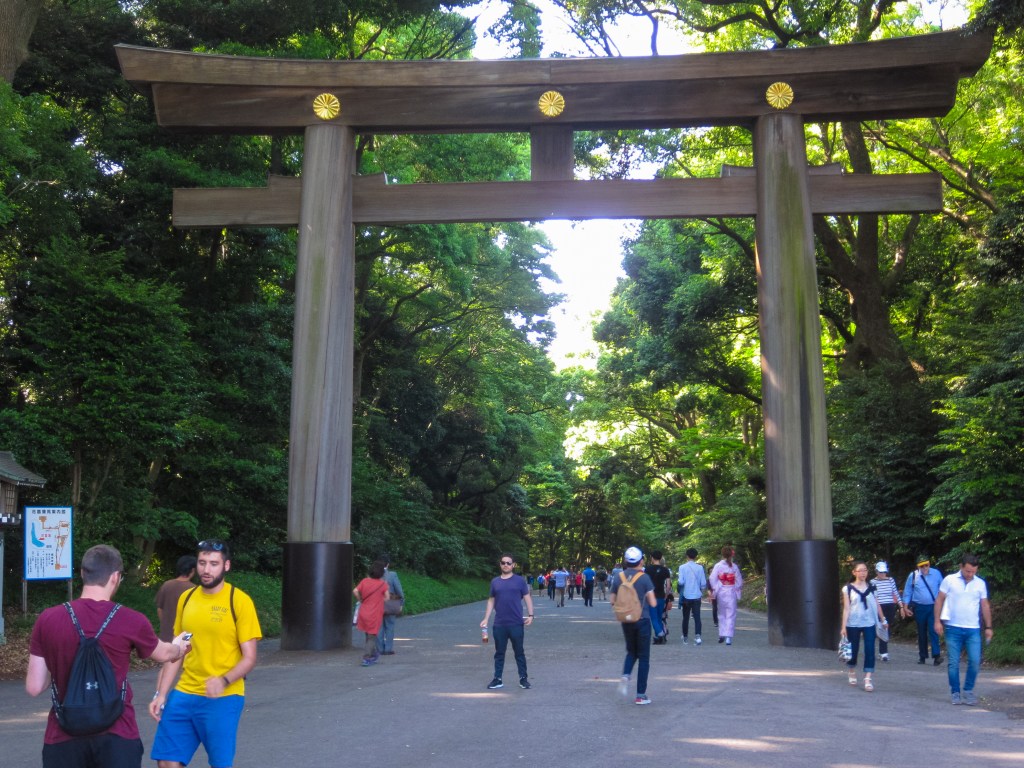
Meiji Jingu is dedicated to Emperor Meiji and Empress Shoken, who oversaw Japan’s transformation from feudal state to modern nation in the late 19th century. The shrine itself is relatively plain by Japanese standards — deliberately so. What makes it extraordinary is the approach: a long gravel path through 70 hectares of forest, passing under several massive wooden torii gates, that creates a genuine sense of transition from the city into something quieter and older. Come in the morning before the tour groups arrive and the path feels almost meditative.
After the shrine, walk five minutes south to Takeshita Street — Harajuku’s famous pedestrian lane and Japan’s most concentrated expression of youth fashion. It’s narrow, packed, loud, and lined end-to-end with boutiques selling looks you won’t find anywhere else on earth. Get a crepe while you’re here. The stands on and around Takeshita Street are a Harajuku institution — paper-thin, filled with everything from custard and strawberry to matcha and red bean, eaten while walking. This is the correct approach.
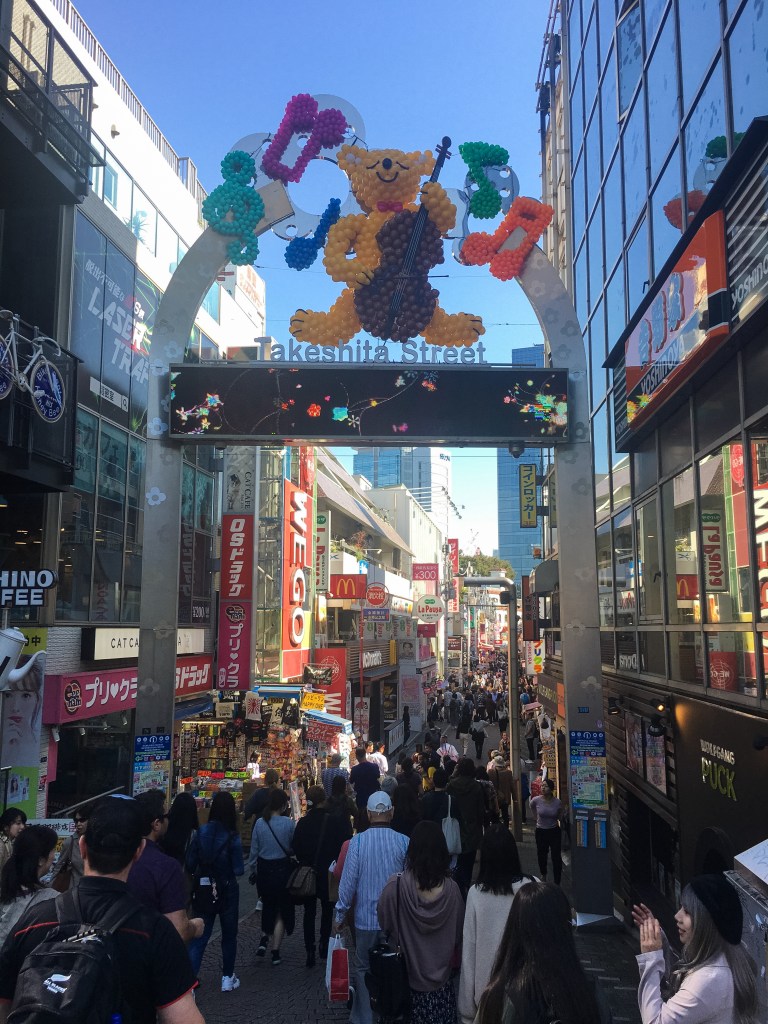
From Takeshita Street, walk west toward Omotesando — wide, tree-lined, noticeably calmer, with some of Tokyo’s most interesting architecture lining the boulevard. Continue to Cat Street, a hidden pedestrian lane behind Omotesando with independent boutiques, vintage shops, and a much less tourist-heavy feel.
Note: Meiji Jingu is free to enter. Harajuku Station (JR Yamanote Line) sits right between the shrine entrance and Takeshita Street.
Attraction 2: Shibuya
Afternoon · Allow 2–3 hours
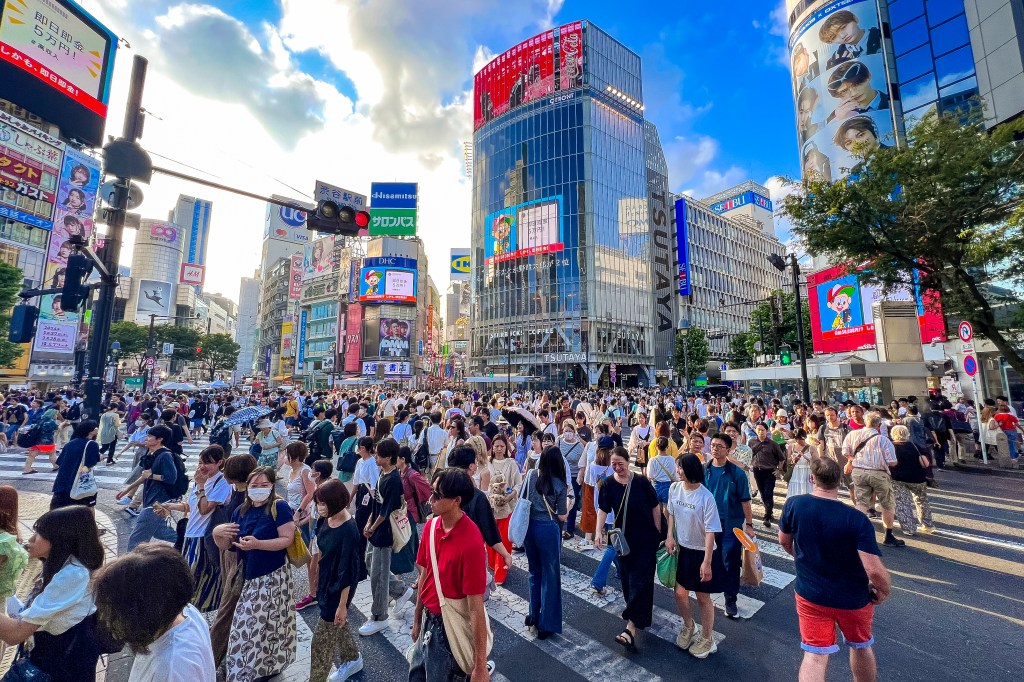
Shibuya is where Tokyo’s reputation for controlled chaos is most visible. The Scramble Crossing — the intersection outside Shibuya Station where up to 3,000 people cross simultaneously from all directions during peak hours — is one of the most photographed spots in Asia, and for good reason. Watch it from above first — the Starbucks on the second floor of the Tsutaya building overlooking the crossing is the classic spot, and while you’re there, grab one of their seasonal drinks. Starbucks Japan takes seasonal menus seriously in a way the rest of the world doesn’t: sakura lattes in spring, hojicha everything in autumn, limited regional flavours that genuinely aren’t available anywhere else. Then go down and cross it yourself. Completely different experience, both worth doing.
Shibuya 109 is the historical epicentre of gyaru culture — an exuberant, maximalist Japanese street fashion movement built around heavy makeup, big hair, and bold styling that peaked in the late 90s and 2000s and still has a presence today. Even if fashion isn’t your thing, it’s worth a look as a piece of living Tokyo pop culture history.
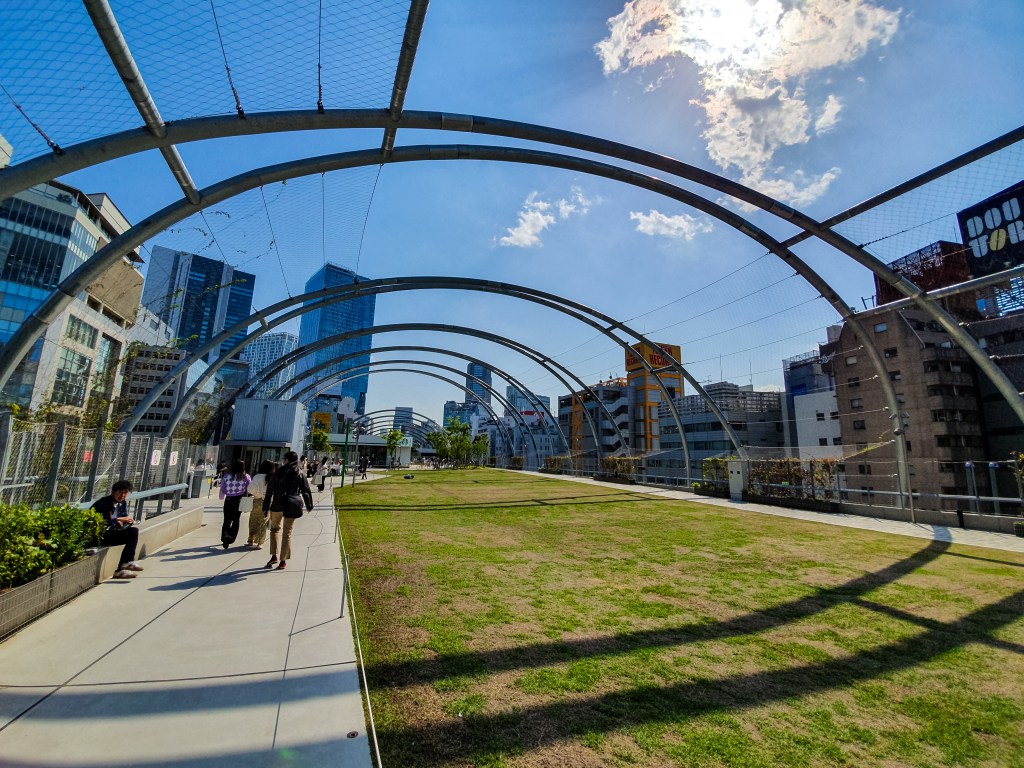
From there, head to Miyashita Park — a rooftop park built on top of a shopping complex that manages to feel genuinely cool rather than a developer’s afterthought. There’s a skate ramp, a climbing wall, independent food stalls, and a good view over Shibuya. It draws a noticeably younger, more local crowd than the main crossing area and is a good place to sit down and recharge mid-afternoon.
For shopping, the Mega Don Quijote on Shibuya’s main strip is essential and, importantly, open 24 hours. Donki, as everyone in Japan calls it, is a discount chain that sells absolutely everything at slightly chaotic volume: regional KitKat flavours, Japanese cosmetics and skincare, electronics, snacks, luggage, household goods, and enough novelty items to create a checked bag problem. If you’re doing souvenir shopping, do it here. The prices are better than airport shops and the selection is absurd in the best way.
Note: Shibuya Sky, the open-air rooftop observation deck on top of Scramble Square, is one of the best views in Tokyo. Book in advance — it sells out, especially at sunset.
Attraction 3: Shinjuku + Omoide Yokocho
Evening · Allow 2–3 hours
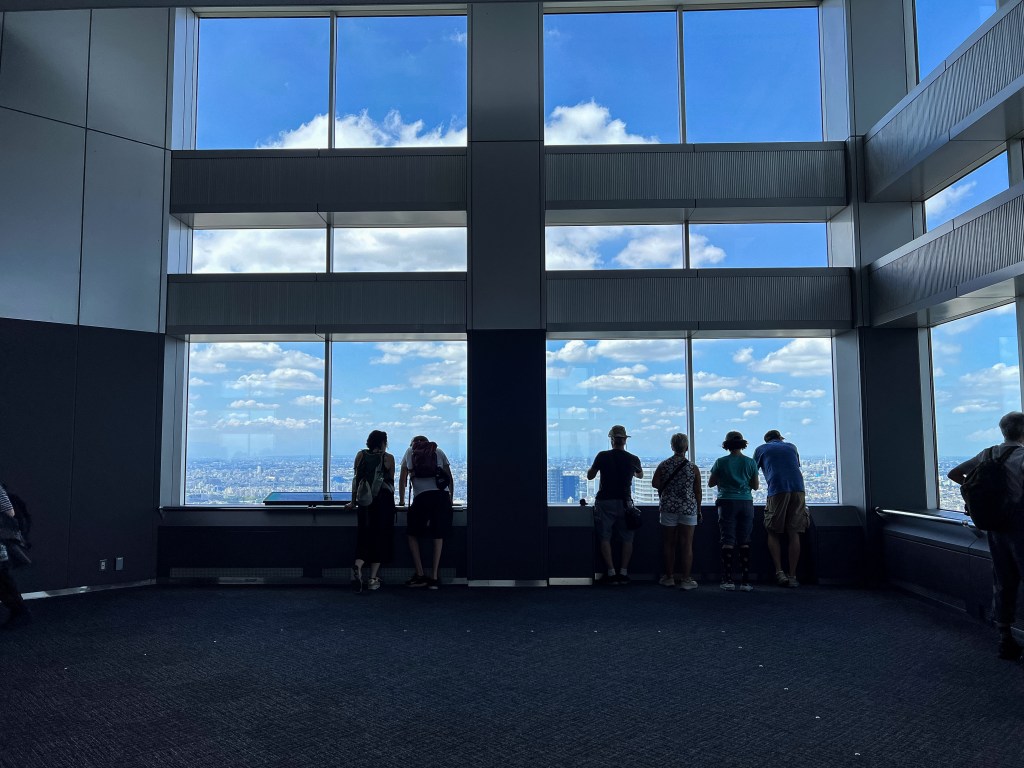
Shinjuku is Tokyo at its most layered. The west side is all skyscrapers and the Tokyo Metropolitan Government Building, which has a free observation deck on the 45th floor — worth visiting as the sun goes down and the city lights start coming on. The east side is where things get interesting after dark.
Start at Omoide Yokocho (Memory Lane) — a narrow alley just northwest of Shinjuku Station that somehow survived the post-war redevelopment that transformed everything around it. It’s a tight row of tiny yakitori bars, most seating fewer than ten people, smoke permanently drifting from charcoal grills, plastic curtains, handwritten menus. Order skewers, a cold beer or highball, and sit elbow-to-elbow with whoever’s next to you. It’s one of those places that feels like it shouldn’t still exist in the middle of one of the world’s most modern cities, which is precisely why it’s worth going.
From there, explore Kabukicho and the Golden Gai — roughly 200 tiny bars, many with room for fewer than eight customers, each with its own distinct personality. Some are welcoming to tourists, some are clearly for regulars — you can usually tell from the door. A genuinely great place to end the evening.
Ni-chome is Tokyo’s gayborhood and one of the most vibrant and welcoming LGBTQ+ districts in Asia — a dense cluster of bars, clubs, and restaurants where the atmosphere on a weekend night is electric regardless of who you are. Most venues are open to all.
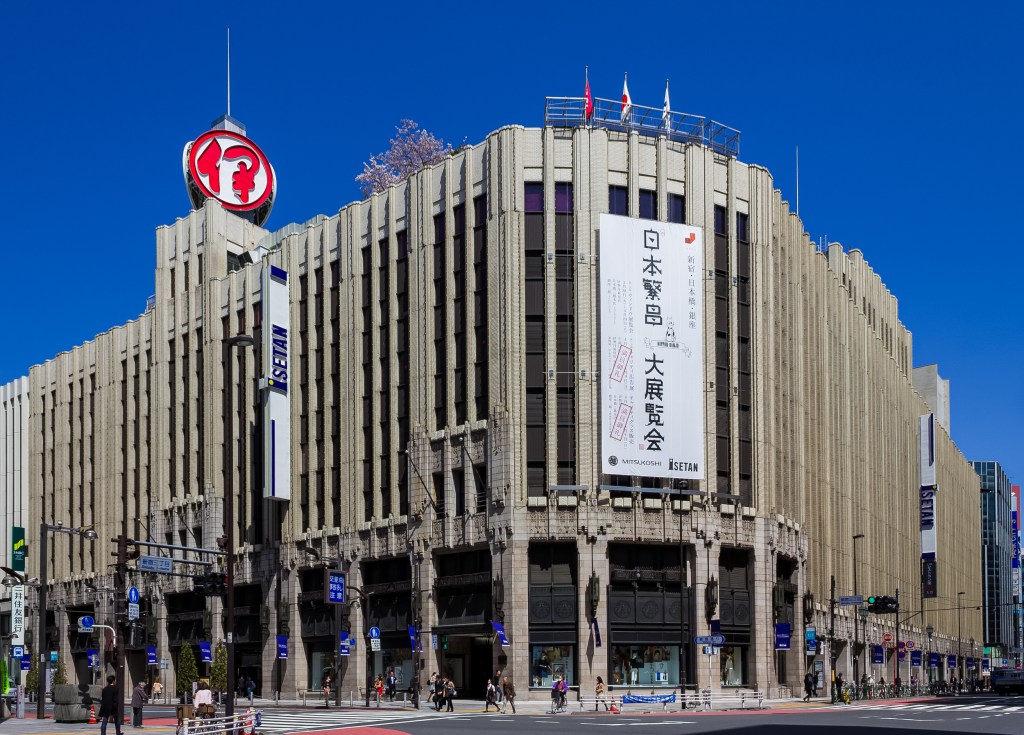
For a retail detour before the evening gets going, Isetan Shinjuku is one of the great Japanese department stores. The basement food hall is exceptional for high-quality snacks and prepared foods, and the fashion floors give you a clear sense of what premium Japanese retail actually looks like.
Note: Shinjuku Station is the busiest train station in the world by passenger volume. The east and west exits are genuinely different worlds — east for entertainment, west for the skyscraper district. Getting turned around in there at least once is basically a rite of passage.
Food: Izakaya
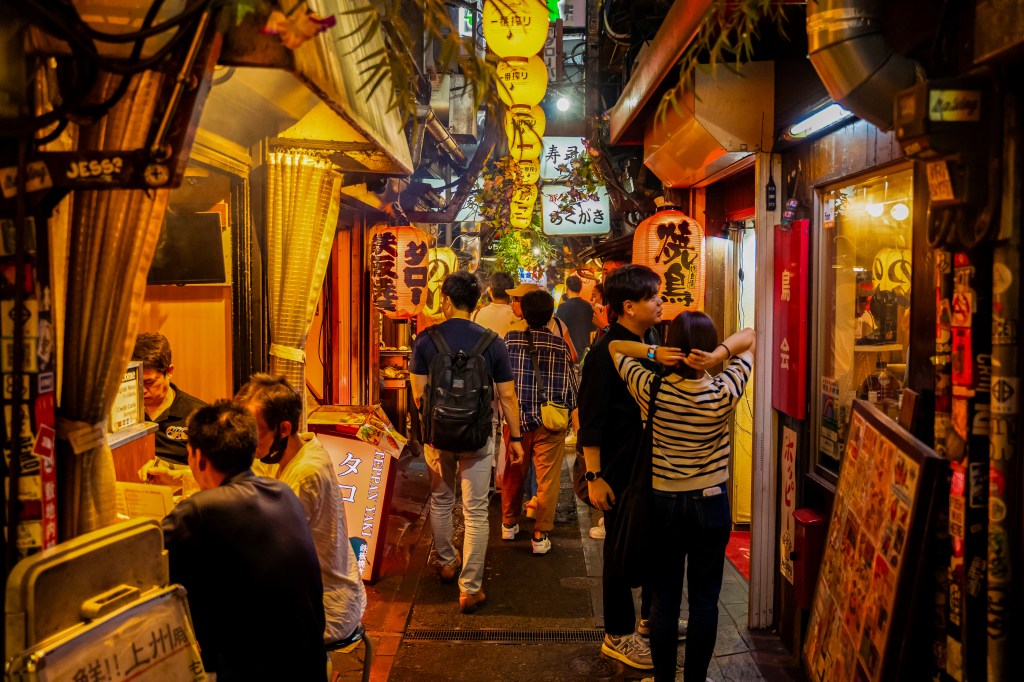
Western Tokyo — and Shinjuku in particular — is the natural home of the Tokyo izakaya experience. An izakaya is essentially a Japanese gastropub: order broadly, share everything, eat slowly, drink at whatever pace suits you. Good izakaya staples include yakitori (grilled chicken skewers), karaage (Japanese fried chicken), edamame, dashimaki tamago (rolled omelette), and potato salad — which is genuinely excellent in Japan and always worth ordering.
If you want to try the format without overthinking it, Torikizoku is a popular chain found all over Tokyo, including around Shinjuku, where every single item on the menu is ¥330. It’s not fancy, it’s always busy, and it’s a completely legitimate way to have a great evening. Order a lot of things, see what you like.
Note: Most izakaya bring an otoshi automatically at the start — a small snack that appears on your bill. It’s the Japanese equivalent of a cover charge, typically ¥300–500 per person. It’s not optional and it’s not a mistake.
Extra Ideas
- Shinjuku Gyoen National Garden — One of Tokyo’s best parks, with distinct Japanese, French formal, and English landscape sections. ¥500 entry. Spectacular during cherry blossom season when it stays open late for evening viewing.
- Shibuya Sky — The open-air rooftop observation deck on Scramble Square. Book in advance and time it for sunset.
- Kabukicho Tower — Shinjuku’s newest entertainment complex, opened 2023, with restaurants, a music venue, and a hotel. Worth a look for the architecture alone.
Raincheck (Bad Weather)
Rain in Shibuya and Shinjuku is mostly irrelevant — both are so densely covered by walkways, department stores, and underground concourses that you can spend hours without getting wet. Specific options:
- Shinjuku’s department store circuit — Isetan, Takashimaya, Odakyu, and Keio are all connected or near-connected and collectively offer more floors of shopping, food, and browsing than you can cover in a day.
- Tokyo Metropolitan Government Building observatory — Free, indoors, 45th floor. On a rainy day the low cloud sitting over the city makes for a genuinely dramatic view.
- Yayoi Kusama Museum — One of Tokyo’s best art experiences, in nearby Shinjuku. Book tickets well in advance — they’re released monthly and sell out quickly.
In Summary: A Day in Western Tokyo
| Attraction 1 | Meiji Jingu Shrine + Harajuku (Takeshita St, Omotesando, Cat Street) |
| Attraction 2 | Shibuya (Scramble Crossing, Miyashita Park, Mega Don Quijote) |
| Attraction 3 | Shinjuku + Omoide Yokocho, Golden Gai, Ni-chome |
| Food | Izakaya — try Torikizoku for an easy, affordable intro |
| Extra ideas | Shinjuku Gyoen · Shibuya Sky · Kabukicho Tower |
| Raincheck | Department store circuit · TMG Observatory · Yayoi Kusama Museum |


.jpg)


.jpg)
Leave a Reply