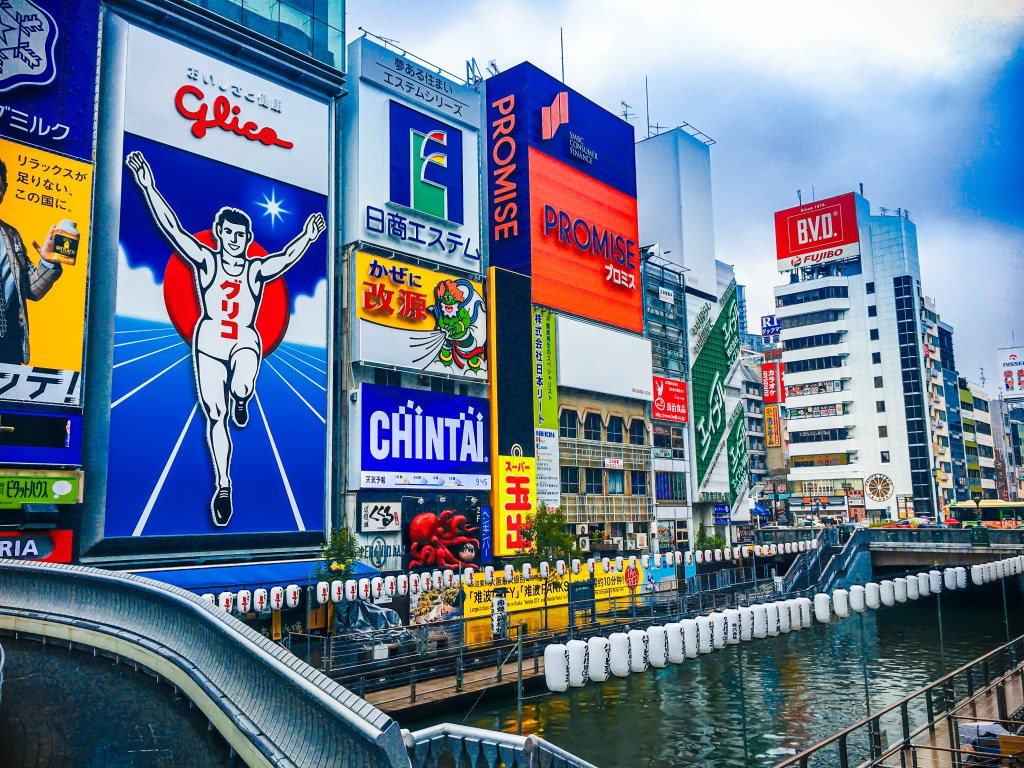
Osaka splits into two distinct personalities along geographic lines. The north, Kita, is where the city does business: serious department stores, polished architecture, and the Sky Building looming over Umeda. The south, Minami, is the Osaka most people picture before they visit: the Glico running man sign, the neon-lit canal, the smell of takoyaki drifting across the street. The two are directly connected by the Midosuji subway line, making it easy to cover both in a single day without any real planning overhead.
Overview
| Base hotel | Central Osaka: Namba, Shinsaibashi, or Umeda all work well; this day starts in the north and works south |
| Getting around | Osaka Metro Midosuji Line connects Umeda directly to Shinsaibashi and Namba. IC card required. |
| Best season | Year-round. Dotonbori is particularly atmospheric at night in any season. |
| Pairs well with | Osaka Castle & Shopping as a contrasting day; heavier on history and daytime sightseeing |
Attraction 1: Umeda Sky Building
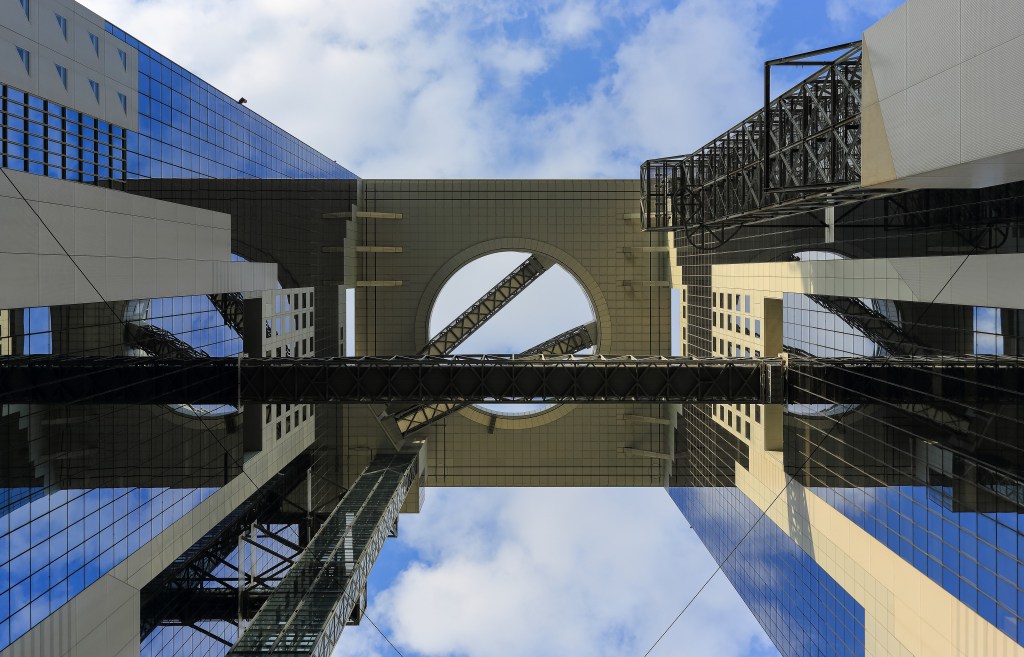
The Umeda Sky Building is one of Osaka’s most distinctive pieces of architecture; two towers connected at the top by a “floating garden” observatory sitting 173 meters above the city. Getting there requires taking an escalator that passes through open air between the towers, which is either exhilarating or mildly terrifying depending on your relationship with heights. The observation deck itself is partly open-air, circular, and offers unobstructed views in every direction across the Osaka basin.
It’s become a popular spot for couples, who come to attach padlocks to the observatory railing as a symbol of their relationship; a tradition borrowed from similar spots in Paris and Seoul. If you’re traveling with a partner, it’s worth knowing about in advance.
The building’s basement level contains a recreation of a 1920s Osaka townscape; a slightly romanticized version of the city’s Showa-era past, but with genuinely good restaurants and worth a wander before heading out.
From the Sky Building, Umeda’s department store circuit is immediately accessible. Lucua and the adjacent Lucua 1100 together form one of the largest shopping complexes in Osaka; good across fashion, food, and homeware. Grand Front Osaka across the street has a slightly more design-forward feel. The basement food halls in both are worth a stop.
Admission details: Umeda Sky Building Floating Garden Observatory is ¥1,500 for adults.
Attraction 2: Shinsaibashi
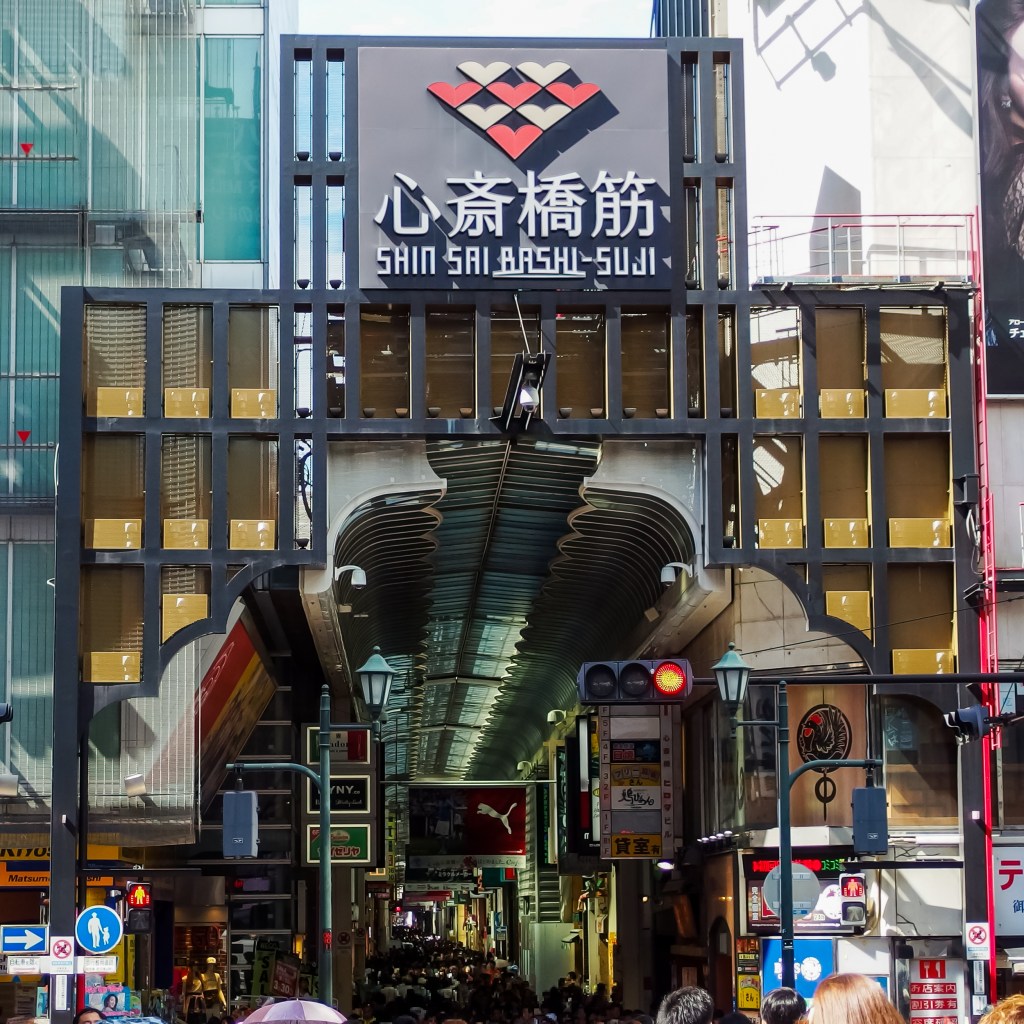
Shinsaibashi-suji is Osaka’s main shopping arcade, running south from Shinsaibashi Station for roughly 600 meters before connecting to Dotonbori. It’s more polished than Tenjinbashi-suji to the north and more varied than most tourist-facing shopping streets; luxury boutiques alongside discount shops, international chains next to local fashion labels that haven’t traveled beyond Osaka.
The streets running east and west off the main arcade are where it gets more interesting. Amerika-mura (America Village), a few blocks west, is Osaka’s youth fashion and streetwear district: vintage clothing shops, independent labels, record stores, and a small central square that functions as a gathering point for a crowd that tends toward the fashionably eccentric. The name comes from the American imports that used to dominate the shops in the 1970s; the aesthetic today is distinctly its own thing.
Further east, Horie is the more design-conscious counterpart: quieter streets, independent cafes, furniture shops, and the kind of neighborhood that feels local even though it’s well and truly on the map.
Admission details: The shopping arcade is free.
Attraction 3: Dotonbori
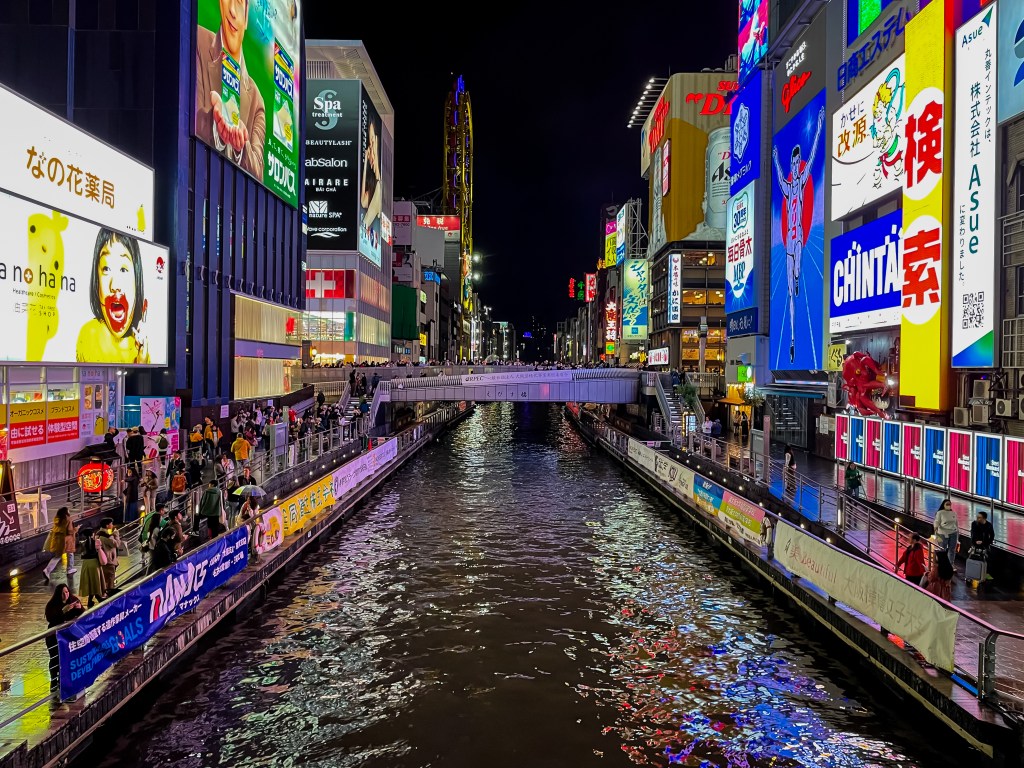
Dotonbori is where Osaka stops being subtle. The canal running through the center is lined on both sides with restaurants and bars, the signage is competing at maximum volume, and the Glico running man billboard; an Osaka landmark since 1935; presides over it all from the Ebisubashi bridge. The best way to take it in is from the water: short boat tours run along the canal and give you the full neon-reflected-in-water experience that defines the postcard version of this city.
Two bridges are worth knowing about: Ebisubashi is the main gathering point and the classic spot for photos of the canal. Tazaemon Bridge (Tazaemombashi) a little further west offers a quieter angle and a better vantage point for taking in the whole strip without the crowd.
The food situation is extraordinary. The density of restaurants, street stalls, and izakaya per square meter is hard to match anywhere in Japan. Eat takoyaki standing up. Try okonomiyaki sitting down. Wander, order things, see what looks good. That’s the correct approach to Dotonbori.
Admission details: Dotonbori is free and open to the public.
Food: Okonomiyaki & Takoyaki
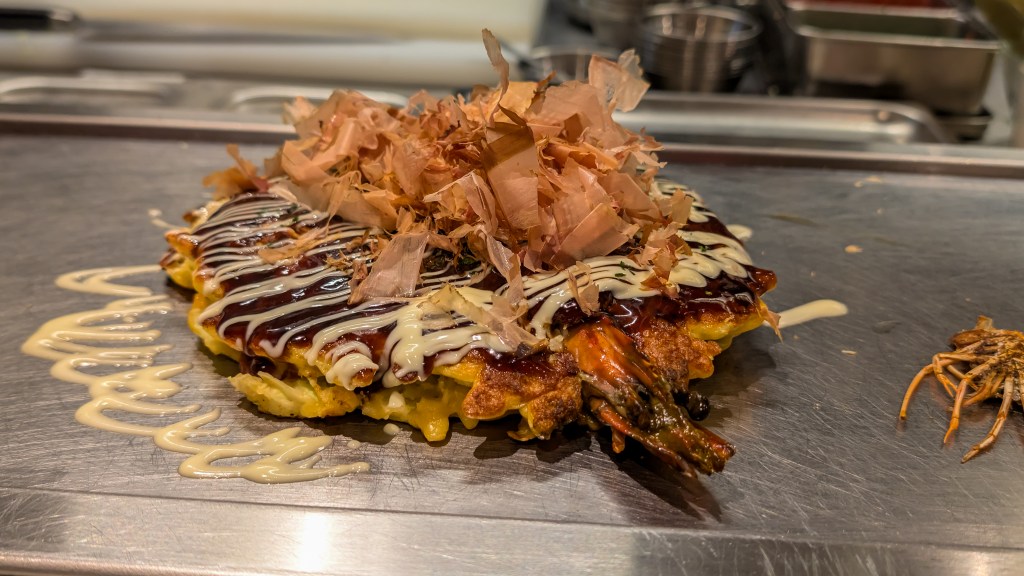
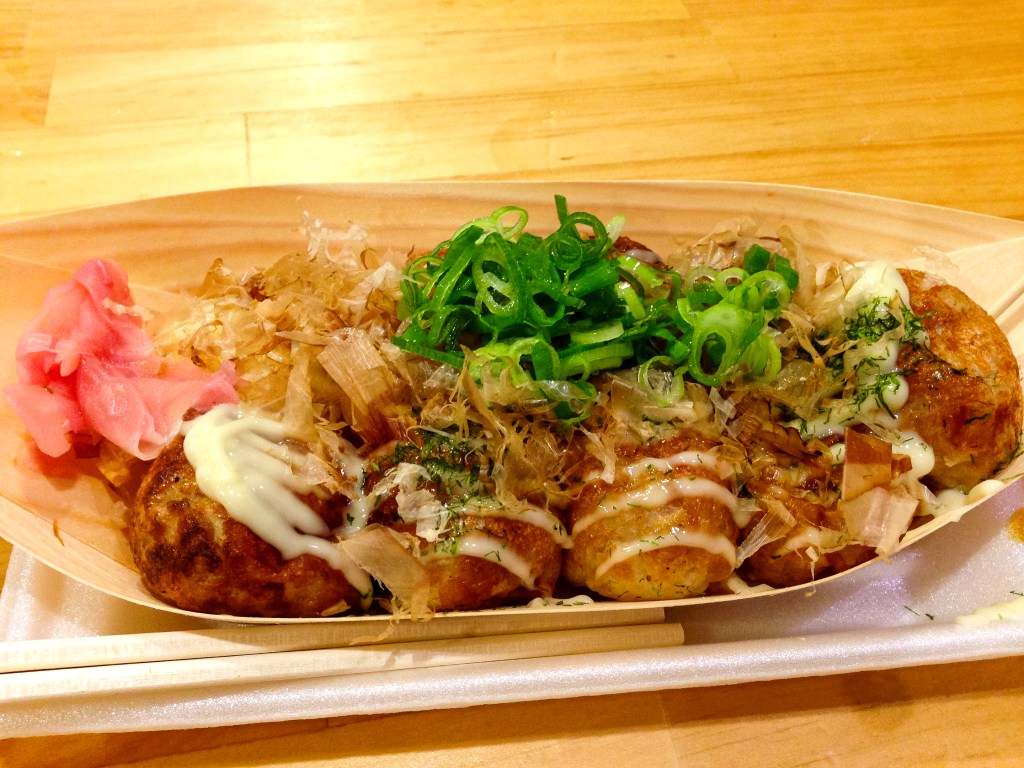
Osaka’s two most iconic foods. Takoyaki: golf ball-sized batter balls filled with octopus, cooked in a dimpled iron pan, topped with takoyaki sauce, mayo, and bonito flakes that move in the heat like something alive. Okonomiyaki: a thick savory pancake built from cabbage, egg, and your choice of protein, grilled and topped with the same sauce-and-mayo combination. Osaka’s version differs from Hiroshima’s; the ingredients are mixed into the batter rather than layered, producing something denser and richer.
Both are available throughout Dotonbori and you won’t struggle to find either. That said, if you want to try a long-standing institution rather than the nearest stall: for takoyaki, Wanaka and Aizuya have been doing it the same way for decades. For okonomiyaki, Mizuno near Dotonbori has been serving the Osaka version since 1945.
Extra Ideas
- Namba Parks: A shopping complex built around a rooftop canyon park; genuinely good architecture and a surprisingly peaceful elevated garden a short walk from Dotonbori.
- Kuromon Ichiba Market: Osaka’s kitchen: a covered market with 170 stalls selling fresh seafood, produce, meat, and street food. More local-facing than the tourist markets in Kyoto; the vendors are friendly and the uni (sea urchin) served on the spot is exceptional.
Raincheck (Bad Weather)
Shinsaibashi and Dotonbori are largely covered or indoor-accessible, making this one of the most rain-resilient days in the Osaka lineup. For a serious washout:
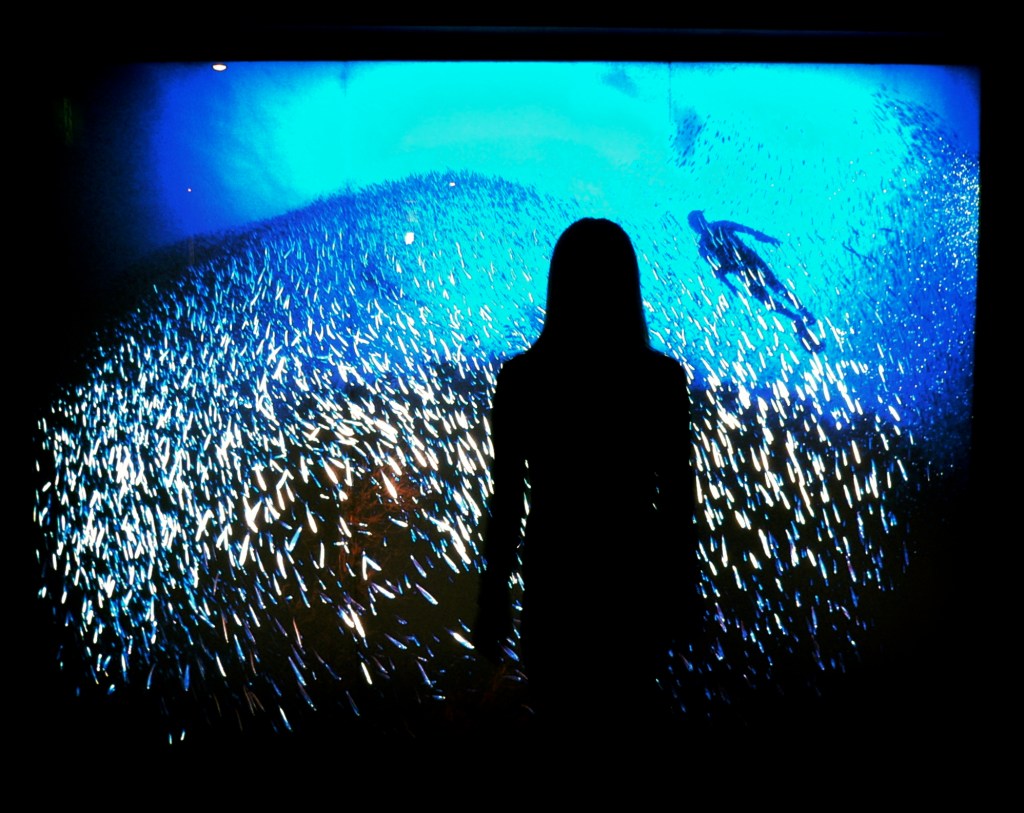
- Osaka Aquarium Kaiyukan: One of the largest aquariums in the world, a short metro ride west to the Osaka Bay area. The central tank houses whale sharks and is genuinely extraordinary. Worth a half-day.
- Underground shopping circuit: Osaka’s underground malls, including Namba Walk, Crysta Nagahori, and Diamor Osaka, form a connected network beneath the city that makes it possible to cover large distances without surfacing. Useful for browsing and staying dry.
In Summary: A Day in Osaka — North & South
| Attraction 1 | Umeda Sky Building + Umeda shopping |
| Attraction 2 | Shinsaibashi, Amerika-mura & Horie |
| Attraction 3 | Dotonbori canal, Ebisubashi & Tazaemon Bridge |
| Food | Takoyaki and okonomiyaki in Dotonbori |
| Extra ideas | Namba Parks · Kuromon Ichiba Market |
| Raincheck | Osaka Aquarium Kaiyukan · Underground shopping circuit |


Leave a Reply