In stark contrast to Tokyo, Osaka has a laid-back, loud, and friendly reputation. It’s a stereotype that lives up to reality; the city wears its personality on its sleeve, and this day covers three sides of it: the feudal grandeur of the castle, the vertical ambition of the tallest skyscraper in Japan, and the longest shopping street in the country. All three represent the pinnacle of their niches across Japan.
Overview
| Base hotel | Central Osaka: Namba, Shinsaibashi, or Umeda all work well |
| Getting around | Osaka Metro and walking. The metro is clean, cheap, and covers all three stops easily. IC card required. |
| Best season | Year-round. The castle grounds are famous for cherry blossoms in spring and plum blossoms in late February. |
| Pairs well with | Osaka: North & South as a contrasting second day; more food-focused and night-oriented |
Attraction 1: Osaka Castle & Miraiza
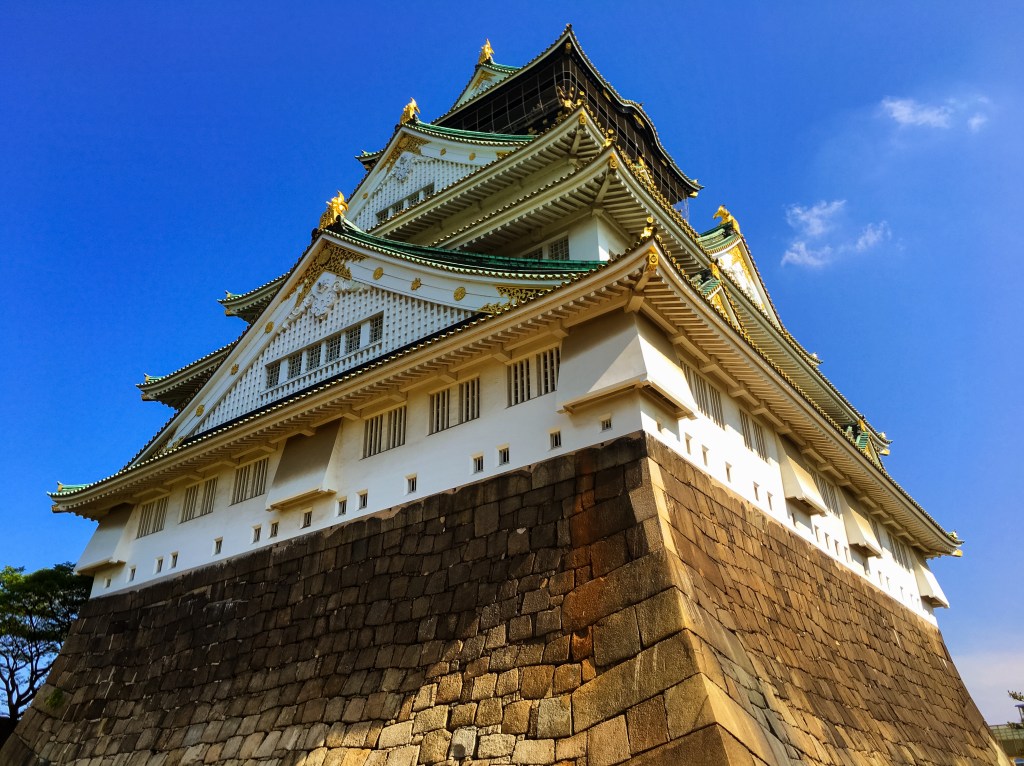
Osaka Castle is one of Japan’s most iconic landmarks and the symbolic center of the city. The original was built by Toyotomi Hideyoshi in 1583 during Japan’s unification period, destroyed, rebuilt, destroyed again, and reconstructed in its current form in 1931. The castle tower houses a museum covering the Sengoku period and Hideyoshi’s story, with the top floor observation deck offering sweeping views over the city and the surrounding nishinomaru garden.
The grounds are enormous: stone walls, ninomaru gardens, wide moats. They’re worth taking slowly even before entering the keep. Particularly in cherry blossom season, this is one of the better castle grounds in Japan for just walking around.
Inside the Miraiza Osaka-Jo, the renovated former military building just inside the castle grounds, is the Kaiyodo Figure Museum; worth a detour for anyone with even a passing interest in Japanese anime, games, or model figures. Kaiyodo is one of Japan’s premier figure manufacturers and this museum doubles as a showcase of their work across decades. The building also has good cafes and restaurants if you need a break before moving on.
Admission details: Castle grounds are free. Osaka Castle Museum (keep entry) is ¥600. Kaiyodo Figure Museum admission is separate; check current pricing at the Miraiza Osaka-Jo website.
Attraction 2: Abeno Harukas & Shinsekai
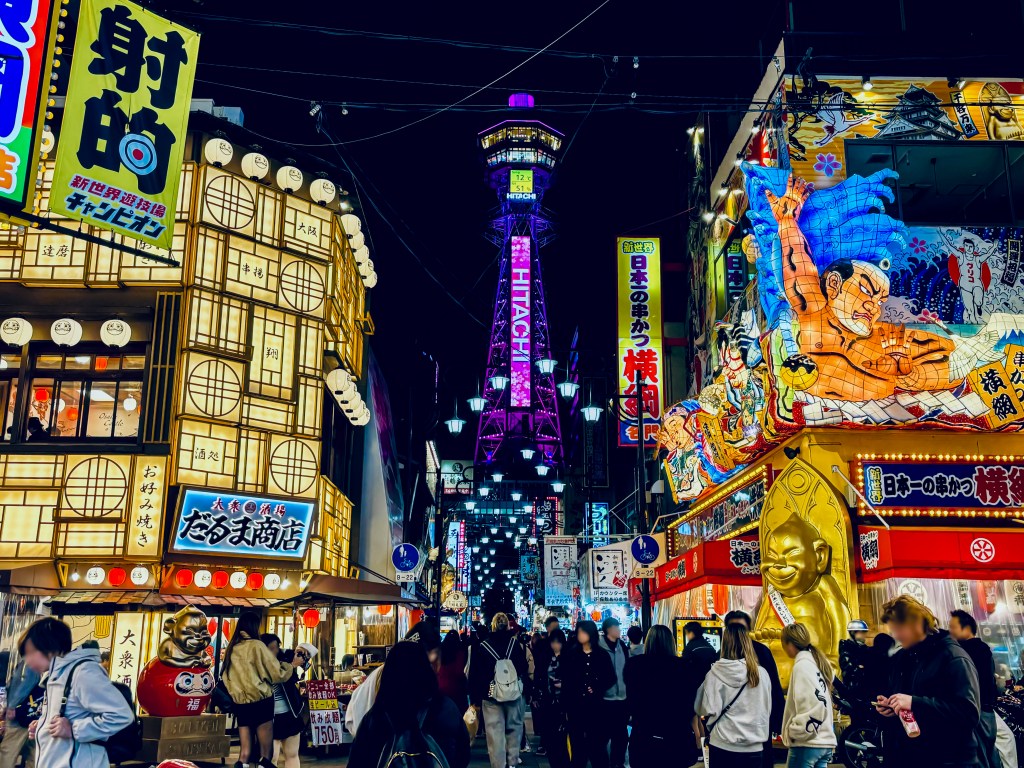
Abeno Harukas, completed in 2014, is Japan’s tallest skyscraper at 300 meters. The observation deck, Harukas 300, occupies the top three floors and offers a 360-degree view of Osaka, Kyoto, and on clear days, the Kii Peninsula and Awaji Island. It’s one of the best urban observation decks in Japan, particularly at dusk when the city lights start coming on. The building also houses the Abeno Harukas Art Museum, which runs rotating exhibitions of Japanese and Western art; worth checking what’s on during your visit.
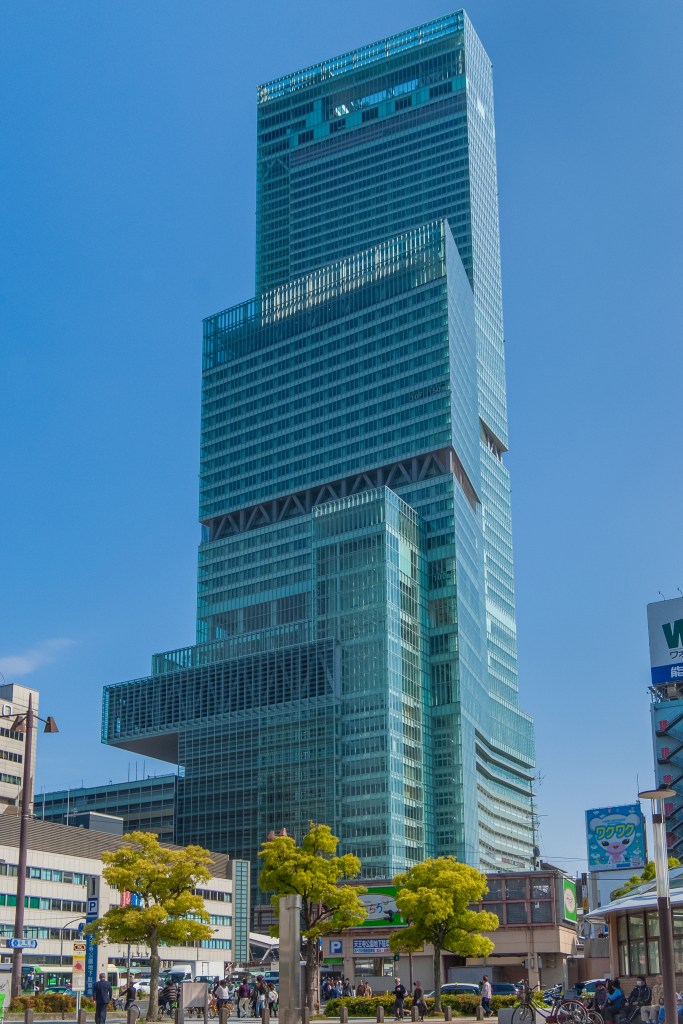
From Abeno Harukas, Shinsekai is a short walk north, and it’s a striking contrast to the polished skyscraper you just left. Shinsekai (literally “new world”) was built in 1912 as a modernist entertainment district modeled on Paris and New York, fell into decades of neglect, and has since been partially revived into something that feels genuinely unlike anywhere else in Osaka. Retro neon signs, the Tsutenkaku tower looming overhead, shogi halls full of elderly regulars in the afternoon; it has a texture that’s rare in modern Japan. This is also where you eat kushikatsu (see Food section below).
Admission details: Harukas 300 observation deck ¥1,800 for adults. Abeno Harukas Art Museum admission varies by exhibition.
Attraction 3: Tenjinbashi-suji Shopping Street
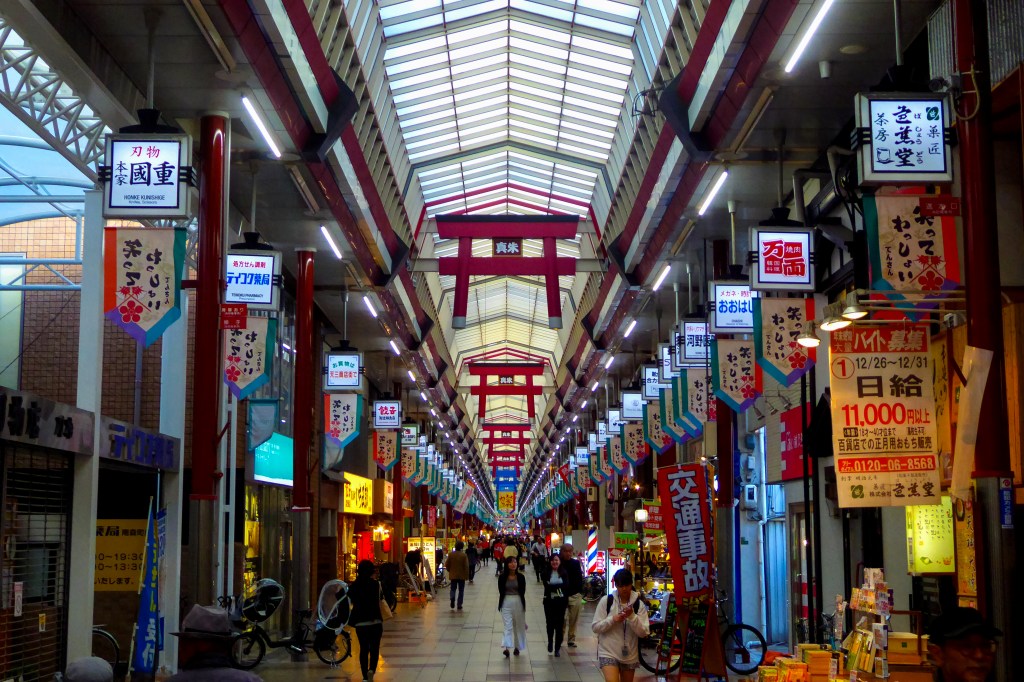
Tenjinbashi-suji is the longest covered shopping street in Japan; 2.6 kilometers of arcade running north from Tenjinbashisuji-rokuchome Station. It’s not a tourist-facing shopping street in the way that Kyoto’s Nishiki Market is. This is where Osaka residents actually shop: local grocers, kitchen supply shops, small clothing boutiques, dagashi (old-school cheap candy) shops, ramen restaurants, and izakaya that have been in the same spot for decades. That everyday quality is exactly what makes it worth the trip.
At the southern end sits Tenmangu Shrine, one of the most important Tenmangu shrines in Japan and the starting point of the Tenjin Matsuri, one of the three great festivals of Japan held every July. Worth visiting even outside festival season for the grounds and the contrast with the commercial street immediately outside its gates.
Admission details: The shopping street is free. Tenmangu Shrine is free to enter.
Food: Kushikatsu
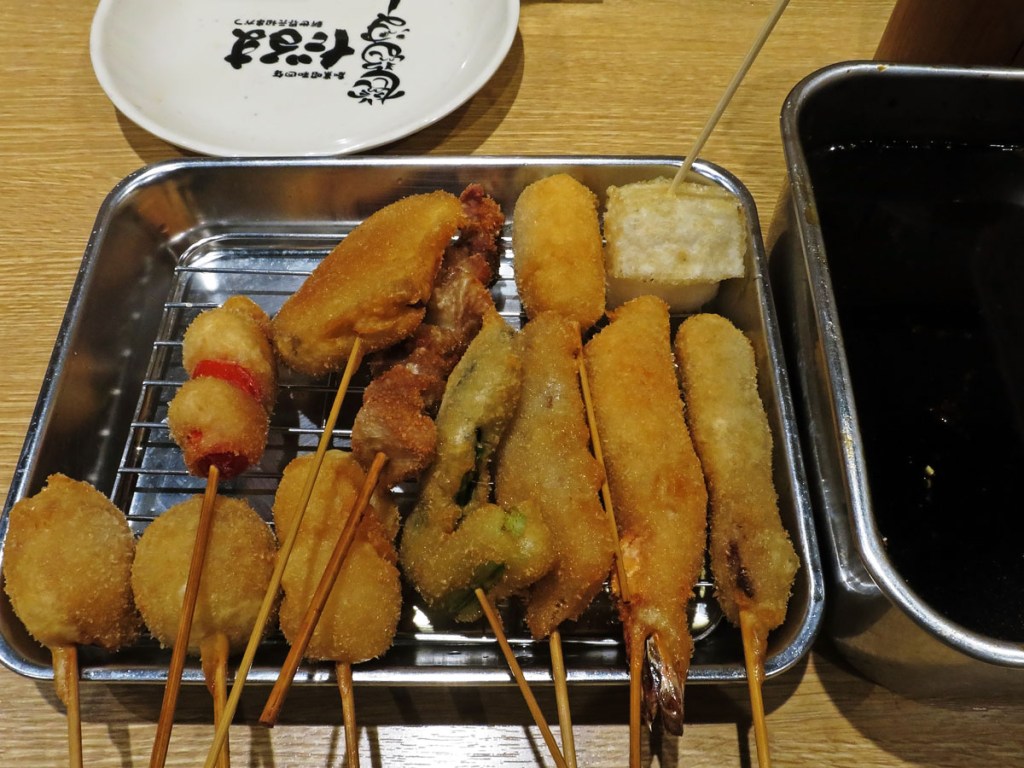
Kushikatsu: breaded, deep-fried skewers of meat, seafood, and vegetables; is Osaka’s most iconic street food, and Shinsekai is the neighborhood most associated with it. The skewers are served with a communal dipping sauce, and there is one absolute rule: no double-dipping. You dip once. If you want more sauce, use the cabbage provided to scoop it onto your skewer. The rule is taken seriously and signs in every kushikatsu restaurant make it very clear.
Order broadly: chicken, pork, shrimp, lotus root, cheese, quail egg. They’re cheap, they come fast, and you’ll order more than you expect. Daruma is the most famous chain in Shinsekai; reliable, no-nonsense, always busy, and a perfectly good place to start.
Extra Ideas
- Den Den Town: Osaka’s answer to Akihabara, a short walk from Shinsekai. Electronics shops, anime merchandise, manga, vintage game stores. Smaller and less overwhelming than Akiba but with a similar energy and occasionally better prices on older electronics and figures.
- Sumiyoshi Taisha: One of Japan’s oldest shrines, located at the southern end of the Osaka Metro, predating the Chinese architectural influences that define most Japanese shrine design. Largely overlooked by tourists, architecturally distinctive, and worth the trip for anyone with a genuine interest in Shinto history.
Raincheck (Bad Weather)
Abeno Harukas and Shinsekai are both effectively indoors or covered, making this one of the more rain-resilient days in the Osaka lineup. The kushikatsu restaurants in Shinsekai are fully indoors, and the Harukas observation deck and museum are unaffected by weather. For a complete washout:
- teamLab Botanical Garden Osaka: teamLab’s Osaka outpost transforms the Nagai Botanical Garden into an immersive nighttime digital art installation. Different in character from the Tokyo installations; this one is set outdoors within the garden, so check the weather forecast and book in advance through the teamLab website.
In Summary: A Day in Osaka — Castle & Shopping
| Attraction 1 | Osaka Castle + Kaiyodo Figure Museum at Miraiza |
| Attraction 2 | Abeno Harukas (observation deck + art museum) & Shinsekai |
| Attraction 3 | Tenjinbashi-suji Shopping Street & Tenmangu Shrine |
| Food | Kushikatsu in Shinsekai; no double-dipping |
| Extra ideas | Den Den Town · Sumiyoshi Taisha |
| Raincheck | teamLab Botanical Garden Osaka |


Leave a Reply