
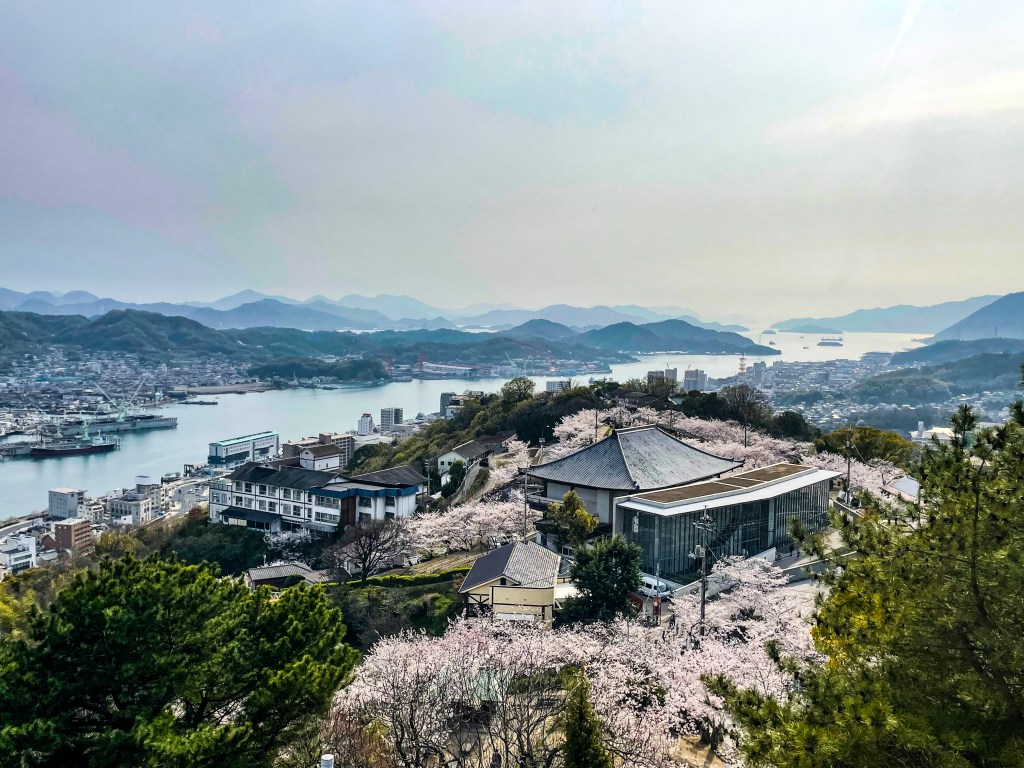
Onomichi is the kind of Japanese city that rewards people who go looking for it. It’s not on every itinerary, it doesn’t have a single unmissable landmark, and that’s exactly the point. It’s a small port city in Hiroshima Prefecture built into steep hillsides above the Onomichi Channel, with a dense network of narrow lanes, old temples, weathered wooden houses, and cats — a lot of cats. It has also served as the setting for a disproportionate number of Japanese films over the decades; something about the city’s unhurried pace and photogenic hillsides has made it a recurring location for directors looking for an authentic, unpolished version of Japan. You can feel that quality when you walk the hillside paths: the light, the textures, the sense that nothing here has changed very quickly for a long time.
Onomichi is also the western gateway to the Shimanami Kaido — the 70-kilometer cycling route that crosses six islands via a series of bridges connecting Honshu with Shikoku. If cycling is on your agenda at any point during a Japan trip, this is the most scenic and well-regarded long-distance cycling route in the country. Rental bikes are available at both ends.
Overview
| Base hotel | Hiroshima city center or Onomichi itself; the city has good boutique accommodation options |
| Getting around | Onomichi is 40 minutes from Hiroshima on the JR Sanyo Line. The hillside temple circuit is on foot; a ropeway connects the lower town to Senkoji Park. |
| Best season | Spring and autumn are peak; the hillside is particularly beautiful during cherry blossom season. Year-round otherwise. |
| Day trip or overnight | Works as a day trip from Hiroshima; worth an overnight if you plan to do the Shimanami Kaido |
Attraction 1: Cat Alley & the Hillside Temple Circuit
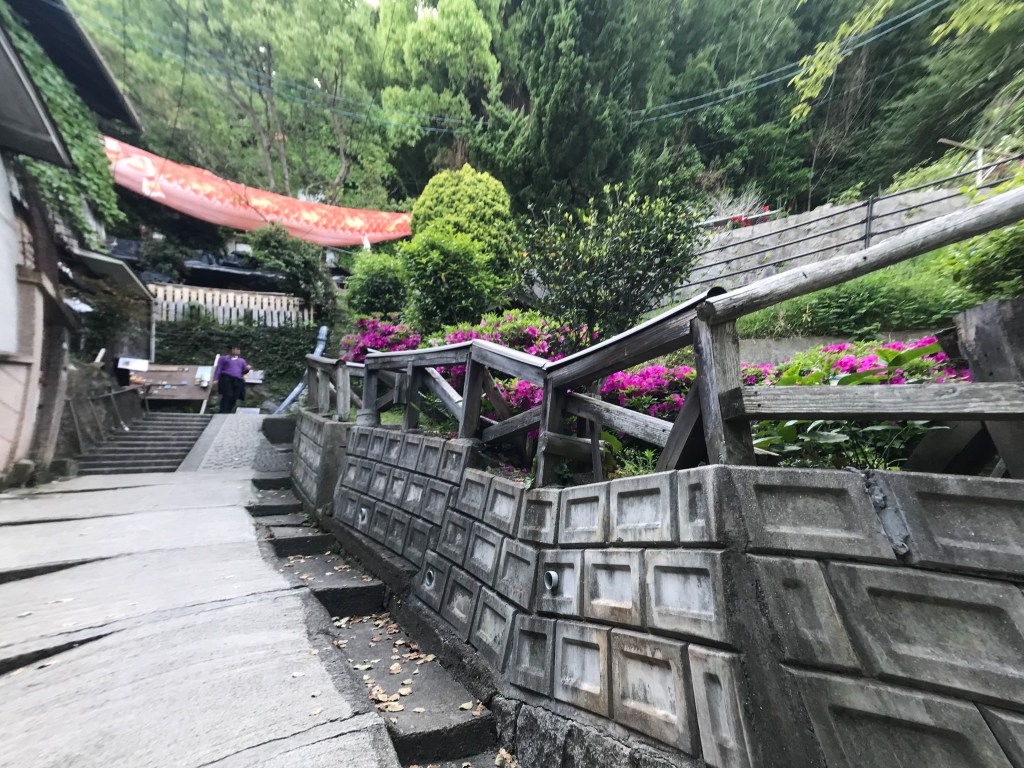
Onomichi’s hillside is laced with narrow stone paths connecting a series of 25 temples, shrines, and historic buildings along what’s known as the Temple Walk. The walk covers around 2.5 kilometers and can be done in either direction; most people start from the ropeway station near Senkoji and work their way down, or start from the harbor and climb. Either way takes two to three hours if you stop properly.
The paths are known colloquially as Cat Alley (Neko no Hosomichi) for the community of cats that live along them, fed and cared for by locals and documented obsessively by visitors. The cats are real, numerous, and largely unbothered by people. There’s a small Cat Museum along the route that catalogs their presence in Onomichi’s culture and history.
The temples along the path vary in size and significance; Tenneiji and Jodoji are the most historically substantial, but several smaller unmanned shrines tucked into the hillside are equally worth finding. The architecture, the narrow lanes, the overgrown stone steps, and the views over the channel at intervals give the walk a quality that’s genuinely hard to find elsewhere in Japan.
Admission details: The Temple Walk is free. Individual temples charge small admission fees (typically ¥200–500).
Attraction 2: Senkoji Temple & Park
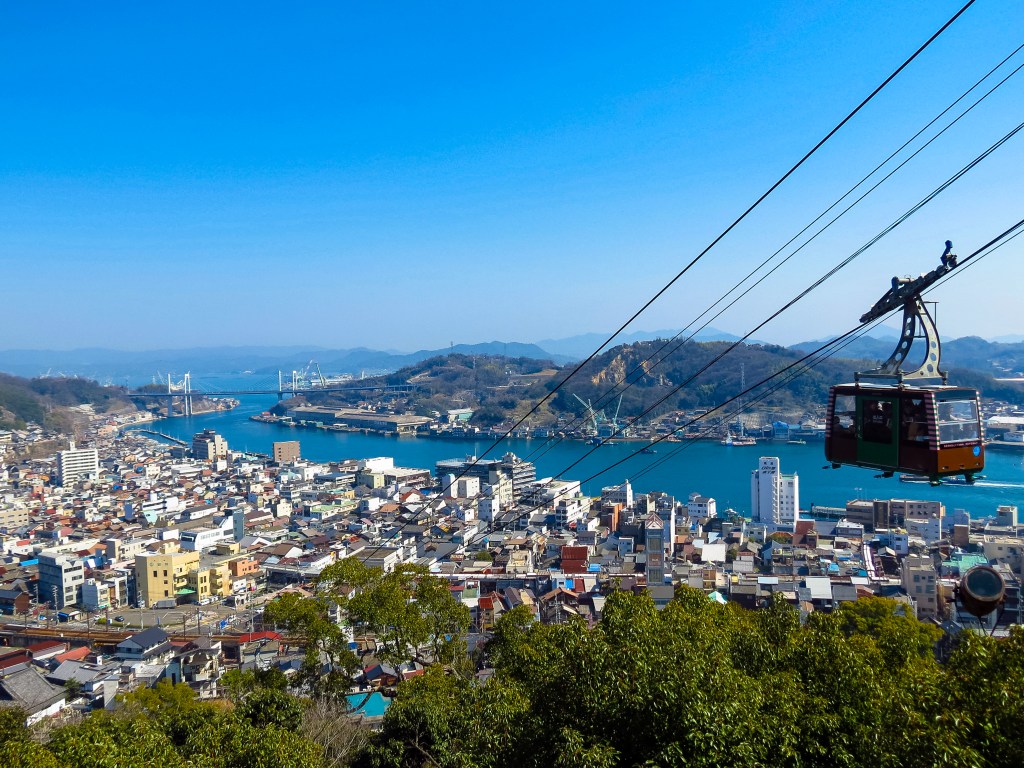
Senkoji is the most prominent temple in Onomichi, perched on a rocky outcrop near the top of the hillside with views over the town and the Onomichi Channel below. The main hall dates to the 9th century in origin and the rock formations around it — several large boulders incorporated into the temple grounds — give it a distinctive character. The view from the boulders above the main hall is one of the better elevated views in western Japan; the channel dotted with small islands, the town spread below, and on clear days the bridges of the Shimanami Kaido visible in the distance.
The surrounding Senkoji Park is worth time in its own right: wooded paths, a small sculpture garden, and in spring, one of the better cherry blossom spots in the Hiroshima Prefecture area.
The ropeway connecting the harbor to Senkoji Park is a practical and enjoyable way to handle the elevation; a short ride with good views from the car.
Admission details: Senkoji Temple is free to enter. Ropeway ¥320 one way, ¥500 round trip for adults.
Attraction 3: Onomichi Harbor & Hondori Shopping Street
Onomichi’s Hondori is a covered shopping arcade running through the lower town parallel to the harbor; smaller and considerably quieter than the Hondori in Hiroshima, and more interesting for it. Local grocery stores, kissaten (old-school coffee shops), small craft shops, a few good bakeries, and the occasional vintage store. It has the feel of a shopping street that exists primarily for the people who live here, which is exactly what makes it worth an hour.
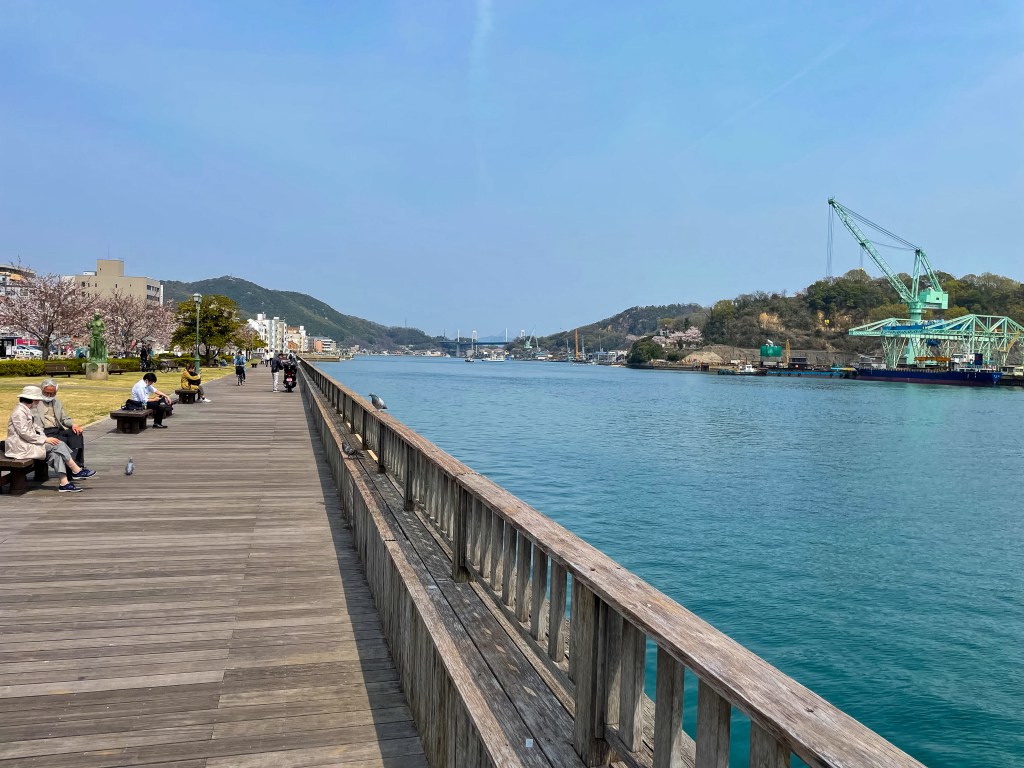
The harbor waterfront running alongside is pleasant for a slow walk, with views across to Mukaishima Island and the occasional ferry crossing. The old port warehouses along the water have been selectively converted into cafes and small galleries without being over-developed; a balance Onomichi has managed better than most small Japanese cities.
Admission details: Free.
Food: Onomichi Ramen
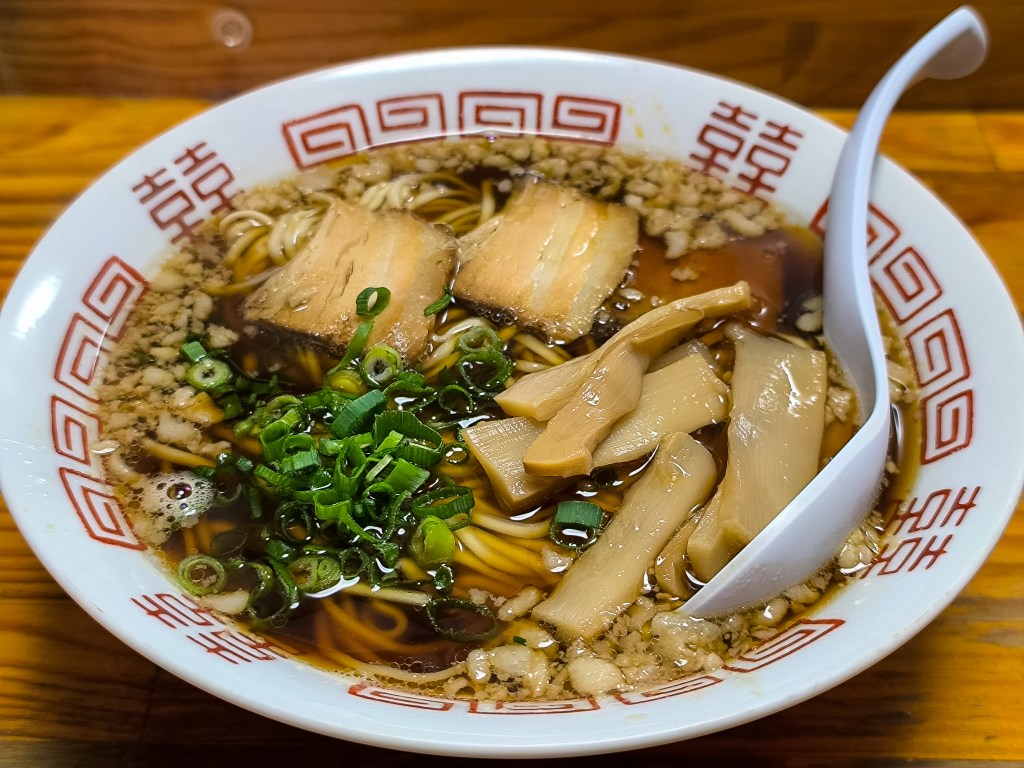
Onomichi has its own distinct ramen style: a soy-based broth made from chicken and small dried fish (niboshi), with flat noodles and a distinctive layer of back fat floating on the surface that gives it a richness and depth unusual in shoyu-style broths. It’s not the most visually elegant bowl, but it’s one of the more distinctive regional ramen styles in western Japan and worth seeking out specifically.
Ichibankan near the station is one of the longest-established Onomichi ramen shops and the most frequently cited as the reference version. Several other shops along Hondori and near the harbor serve variations; the quality is generally high.
Extra Ideas
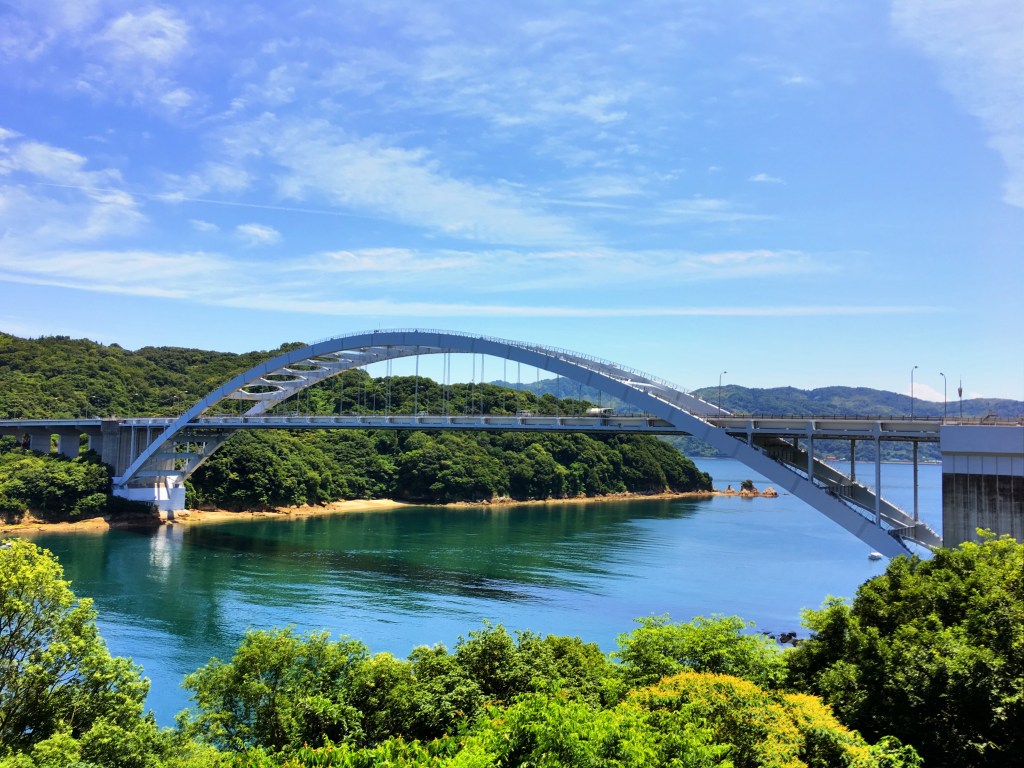
- Shimanami Kaido: Onomichi is the starting point for the 70-kilometer island-hopping cycling route to Imabari in Shikoku. Rental bikes are available near the station and at the ferry terminal. The first stretch to Mukaishima Island is accessible by ferry and gives you a taste of the route without committing to the full crossing.
- Onomichi U2: A converted waterfront warehouse that houses a hotel, a bicycle shop, a bakery, a restaurant, and a general store; all designed around cycling culture and executed with a level of care that makes it worth visiting even if you’re not staying or cycling. The bakery and restaurant are both good and the building itself is an example of adaptive reuse done right.
- Ushitora Shrine: A small shrine at the top of the hillside near the Cat Alley path, with good views and a character that feels genuinely unvisited. One of those places that appears on no particular itinerary but rewards anyone who finds it.
Raincheck (Bad Weather)
Onomichi’s hillside paths are less enjoyable in heavy rain, though the covered Hondori and harbor buildings provide reasonable shelter. Specific indoor options:
- Onomichi City Museum of Art: A well-regarded municipal art museum with rotating exhibitions of modern and contemporary Japanese art, housed in a building designed by architect Tadao Ando. The building itself is worth seeing.
- Onomichi Literary and Film Museum (Bungakukan): A museum dedicated to the writers and filmmakers associated with Onomichi, documenting the city’s outsized role in Japanese cinema and literature. Compact, well-organized, and worth an hour.
- Onomichi U2 and harbor cafes: Several of the converted waterfront buildings make good spots to wait out a downpour over coffee.
In Summary: Onomichi Daytrip
| Attraction 1 | Cat Alley & the Hillside Temple Circuit |
| Attraction 2 | Senkoji Temple & Park |
| Attraction 3 | Hondori Shopping Street & the Harbor |
| Food | Onomichi ramen |
| Extra ideas | Shimanami Kaido · Onomichi U2 · Ushitora Shrine |
| Raincheck | Onomichi City Museum of Art · Literary and Film Museum · U2 harbor cafes |


.jpg)

Leave a Reply