
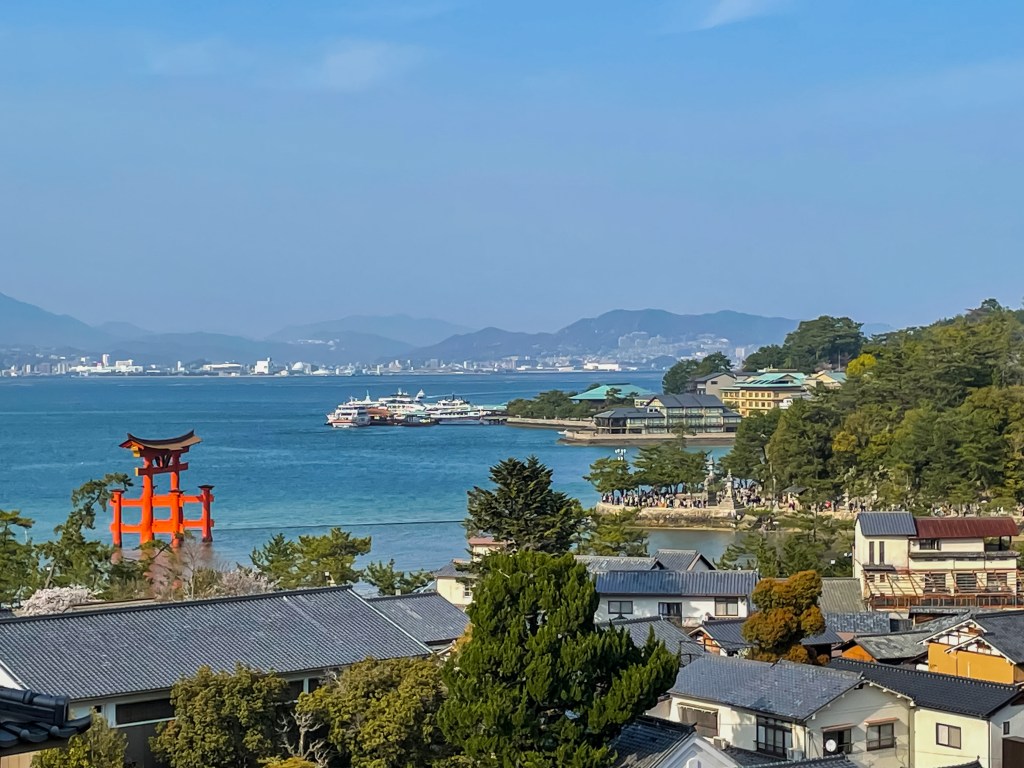
Miyajima — officially Itsukushima — is a small island about 30 minutes from Hiroshima by streetcar and ferry, and one of the most photographed places in Japan. The floating torii gate of Itsukushima Shrine, standing in the sea at high tide, has been one of Japan’s canonical images for centuries. The island also has a mountain worth climbing, a shrine complex worth exploring slowly, and a main street worth eating your way through. It’s a popular daytrip option for visitors to Hiroshima, manageable as a half-day at minimum and a full day if you want to do it properly.
One thing to plan around: the torii gate and shrine sit in tidal water. At high tide the gate appears to float; at low tide you can walk out to it across the exposed seabed. Both are worth seeing, and they’re genuinely different experiences. Check the tide schedule before you go and try to time at least one of them.
Overview
| Base hotel | Hiroshima city center; the island has ryokan options for those who want to stay overnight and see the shrine lit up at night |
| Getting around | Hiroshima streetcar to Miyajimaguchi, then a 10-minute JR ferry to the island. JR Pass holders ride the ferry free. Everything on the island is walkable, or ropeway for Mt. Misen. |
| Best season | Year-round. Autumn foliage on Mt. Misen is spectacular. Spring cherry blossoms around the shrine are among the best in western Japan. |
Attraction 1: Itsukushima Shrine & The Floating Torii
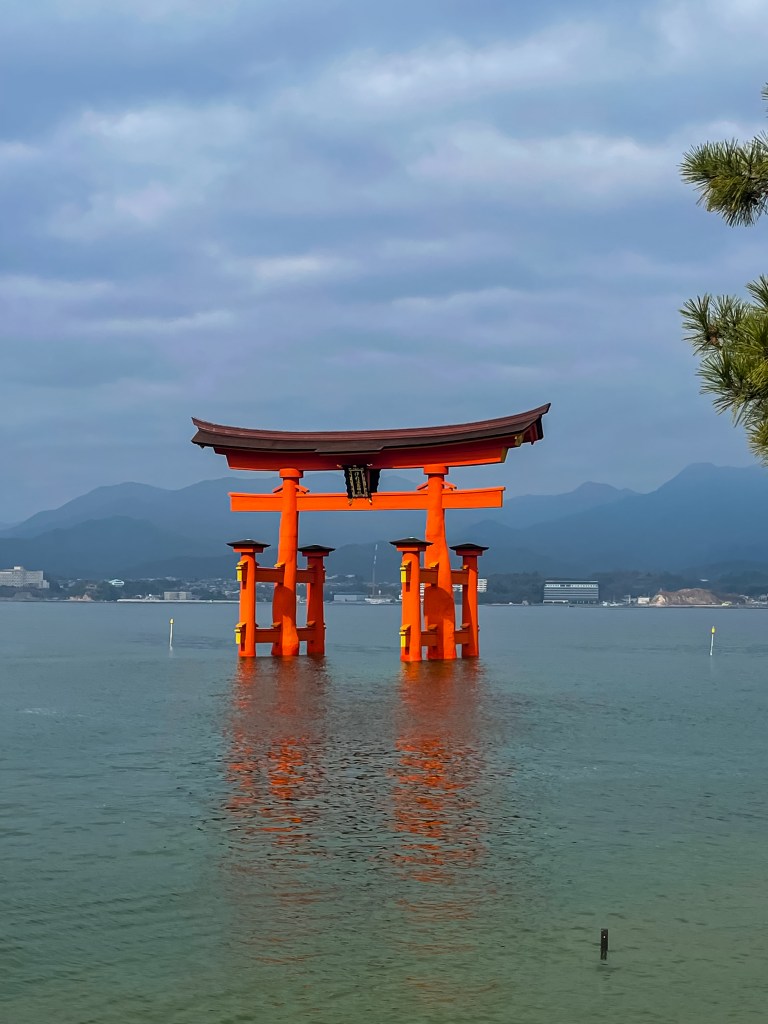
Itsukushima Shrine has occupied this location since the 6th century, though the current structure dates to the 12th century, when it was rebuilt under the patronage of the powerful warlord Taira no Kiyomori. The shrine is built on stilts over the tidal flats, so that at high tide the entire complex appears to float on the water. Walking through the haiden (worship hall) and along the covered corridors at high tide, with the sea visible through the gaps in the floor, is an experience with no real equivalent at any other shrine in Japan.
The O-torii gate standing offshore is one of the most recognizable structures in Japan: 16 meters tall, constructed of camphor wood, and rebuilt multiple times over the centuries in the same location. Up close it’s larger and more weathered than photographs suggest. Walking out to it across the exposed tidal flats at low tide, with the gate looming above you, is a completely different experience from seeing it from the shore.
The island is famously populated with wild deer, considered sacred messengers of the gods just as in Nara. They are also considerably more assertive. On one visit I watched a deer methodically bite through a discarded tourism pamphlet page by page, apparently mistaking it for food. Don’t litter; not for environmental reasons, but because they will absolutely find it.
Admission details: Itsukushima Shrine ¥300 for adults.
Attraction 2: Mount Misen
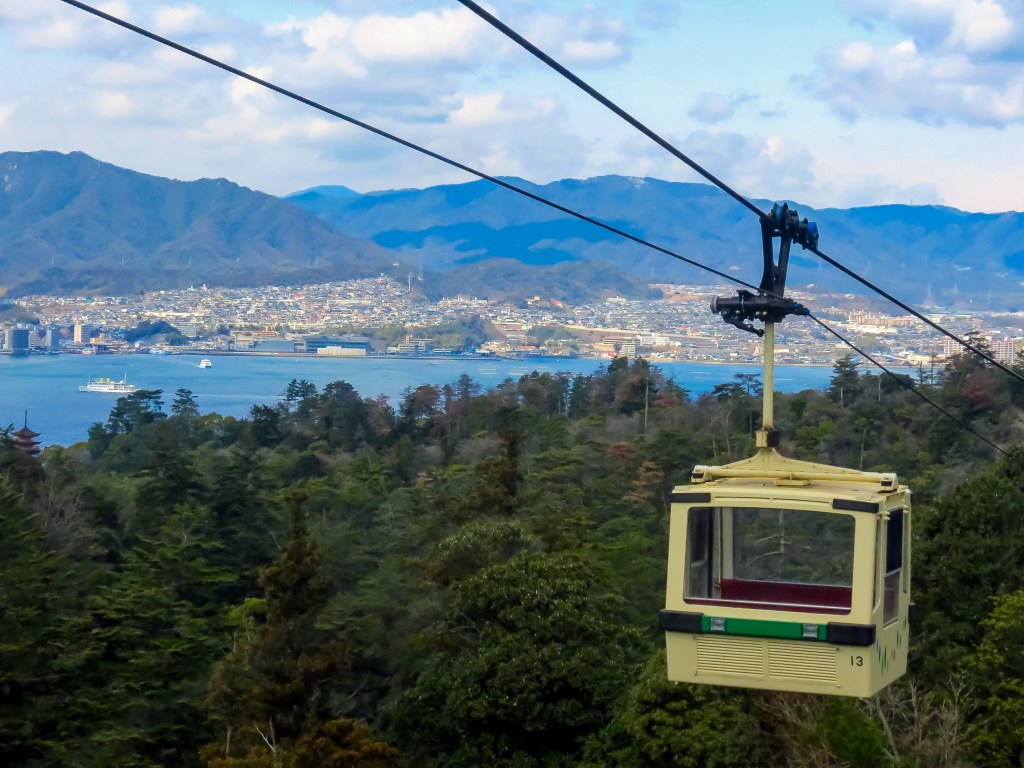
At 535 meters, Mount Misen is the highest point on the island and offers one of the most expansive views in western Japan: the Seto Inland Sea spreading out in every direction, dotted with islands, with the Hiroshima coastline visible on clear days. The mountain is sacred in its own right; the monk Kukai (Kobo Daishi) is said to have meditated here in the 9th century, and a flame he lit supposedly still burns at the Kiezu-no-Reikado hall on the summit.
There are two ways up: the ropeway, which takes about 15 minutes and drops you a short walk from the summit, or any of three hiking trails ranging from about 90 minutes to two hours. The Daisho-in Trail is the most popular and passes several interesting temple buildings on the way up. The ropeway is the practical choice for most visitors; the hiking trails reward those with the time and energy.
Admission details: Ropeway ¥2,000 round trip for adults. Hiking trails are free.
Attraction 3: Omotesando Street & Daisho-in Temple
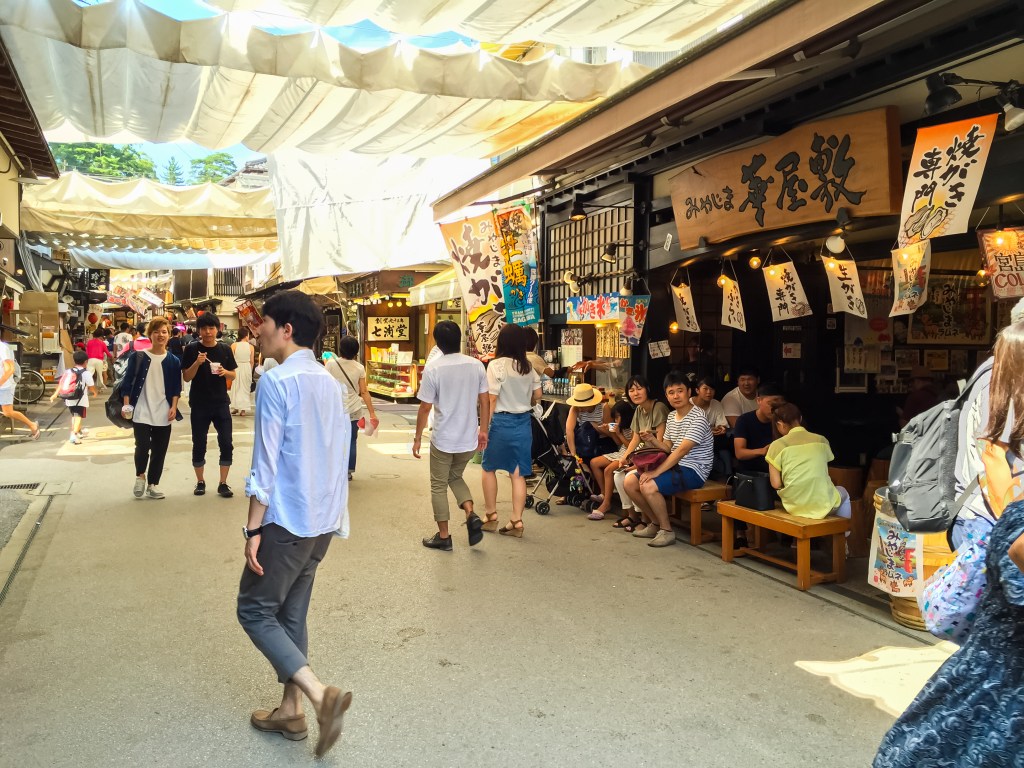
Omotesando is the main shopping street running from the ferry terminal toward the shrine, lined with shops selling momiji manju: Miyajima’s signature souvenir, small maple leaf-shaped cakes filled with red bean paste, custard, chocolate, or other fillings, baked fresh in iron molds you can watch through the shop windows. Try the fresh-baked ones rather than the boxed versions; the difference is significant.
At the far end of the street, slightly away from the main tourist circuit, Daisho-in Temple is one of the most rewarding stops on the island and consistently undervisited relative to the shrine. It’s a Shingon Buddhist temple complex built into the hillside with multiple halls, a cave passage lined with small Buddha statues, hundreds of komainu (guardian dog statues) each wearing a hand-knitted hat placed there by worshippers, and a large collection of religious art and artifacts. Budget at least 45 minutes; it rewards slow exploration.
Admission details: Omotesando Street is free. Daisho-in Temple is free to enter.
Food: Momiji Manju & Oysters
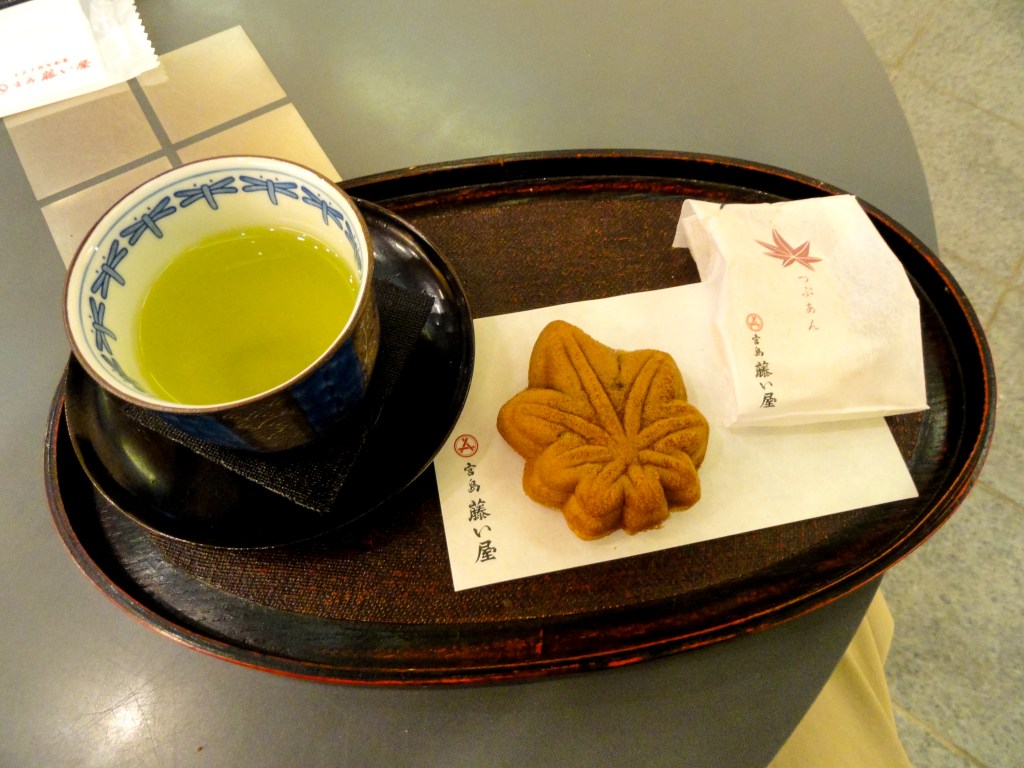
Miyajima has two foods that are non-negotiable. Momiji manju (see above) is the souvenir; the fresh-baked version eaten warm on the street is the correct version. The island is also one of the premier oyster-producing areas in Japan: Hiroshima Prefecture accounts for around 60% of Japan’s oyster output, and the oysters grilled on the half-shell at stalls along Omotesando Street are exceptional. Large, briny, served with a squeeze of lemon. Have several.
For a sit-down meal, a number of restaurants along the shopping street and near the shrine serve anago (sea eel) over rice: another Miyajima specialty and a more restrained, elegant alternative if you want something that requires sitting down.
Extra Ideas
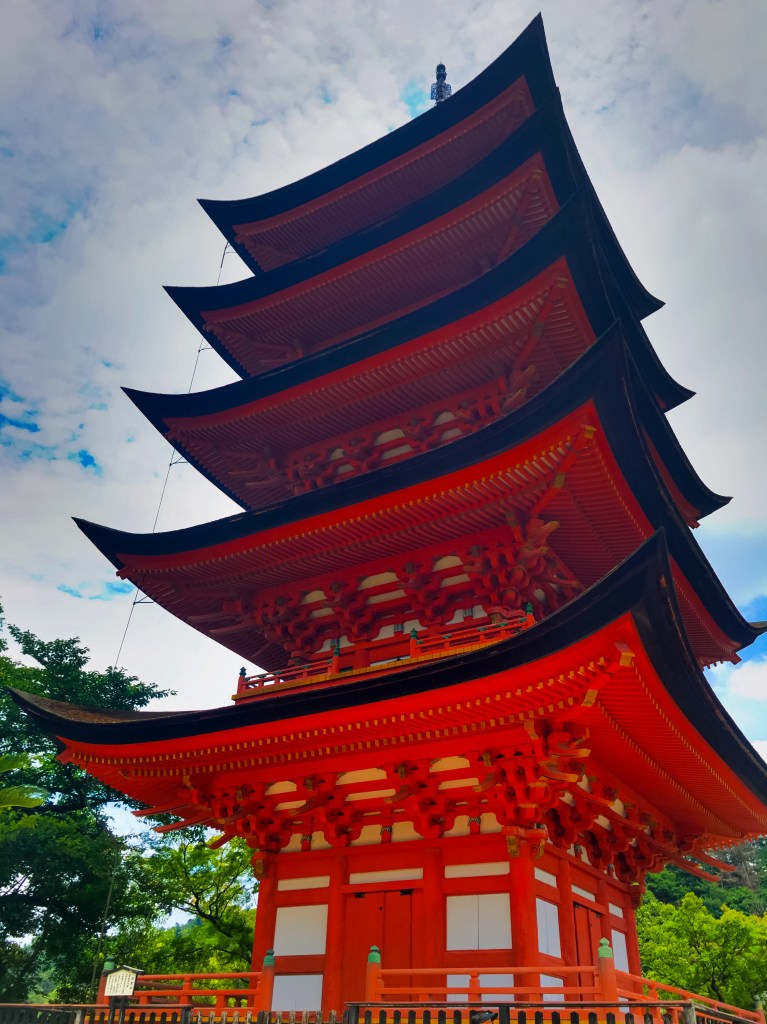
- Tahoto Pagoda: A distinctive two-story pagoda visible from the shrine approach, dating to 1523. A short walk up from the main shrine complex and worth the detour for the elevated view over the torii and sea.
- Miyajima at night: If staying overnight on the island, the shrine and torii are illuminated after dark, and the island loses most of its day-visitor crowd by late afternoon. Watching the gate at dusk from the shore with the lights coming on is one of the quieter, more memorable moments in this part of Japan.
- Kayaking: Several operators offer kayak rentals around the island, giving you a different perspective on the torii gate from the water. Worth looking into if outdoor activities are a priority.
Raincheck (Bad Weather)
Miyajima in mist and light rain is actually beautiful; the shrine and gate in low cloud have a quality that clear days don’t. For heavy rain:
- Daisho-in Temple: Largely covered and navigable in wet weather; the cave passage and enclosed halls are entirely indoors.
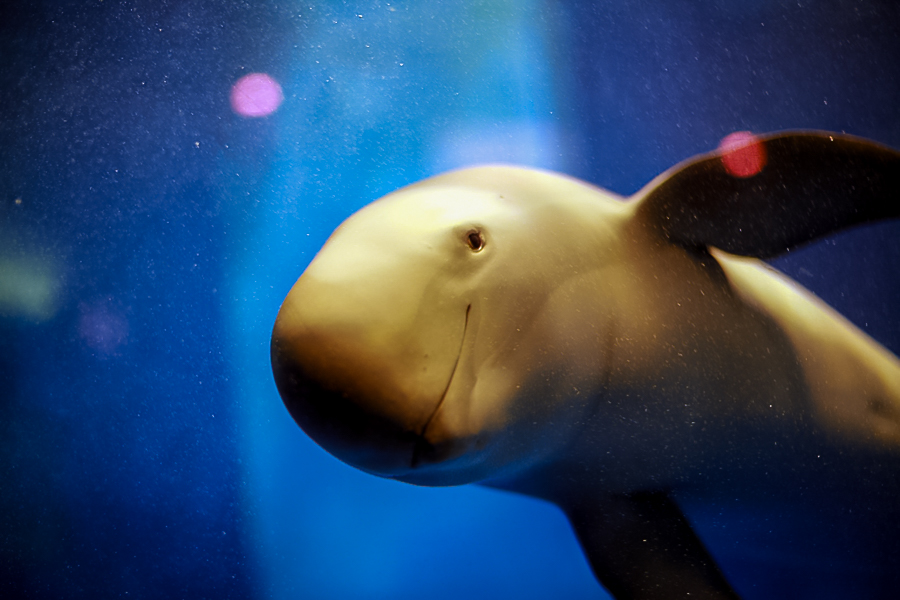
- Miyajima Aquarium: Located near the ferry terminal on the western shore of the island, the aquarium houses sea otters, Commerson’s dolphins, and a good range of Seto Inland Sea marine life. A solid indoor option for a few hours and particularly good if you’re traveling with kids.
- Miyajima Traditional Craft Center: A free museum near the ferry terminal covering the island’s lacquerware and woodworking traditions. Entirely indoors and genuinely interesting for 45 minutes.
In Summary: Miyajima Daytrip
| Attraction 1 | Itsukushima Shrine & the floating torii |
| Attraction 2 | Mount Misen (ropeway or hiking trail) |
| Attraction 3 | Omotesando Street & Daisho-in Temple |
| Food | Momiji manju + grilled oysters on Omotesando Street |
| Extra ideas | Tahoto Pagoda · Miyajima at night · Kayaking |
| Raincheck | Daisho-in Temple · Miyajima Aquarium · Traditional Craft Center |
 Matt Fuji
Leave a comment