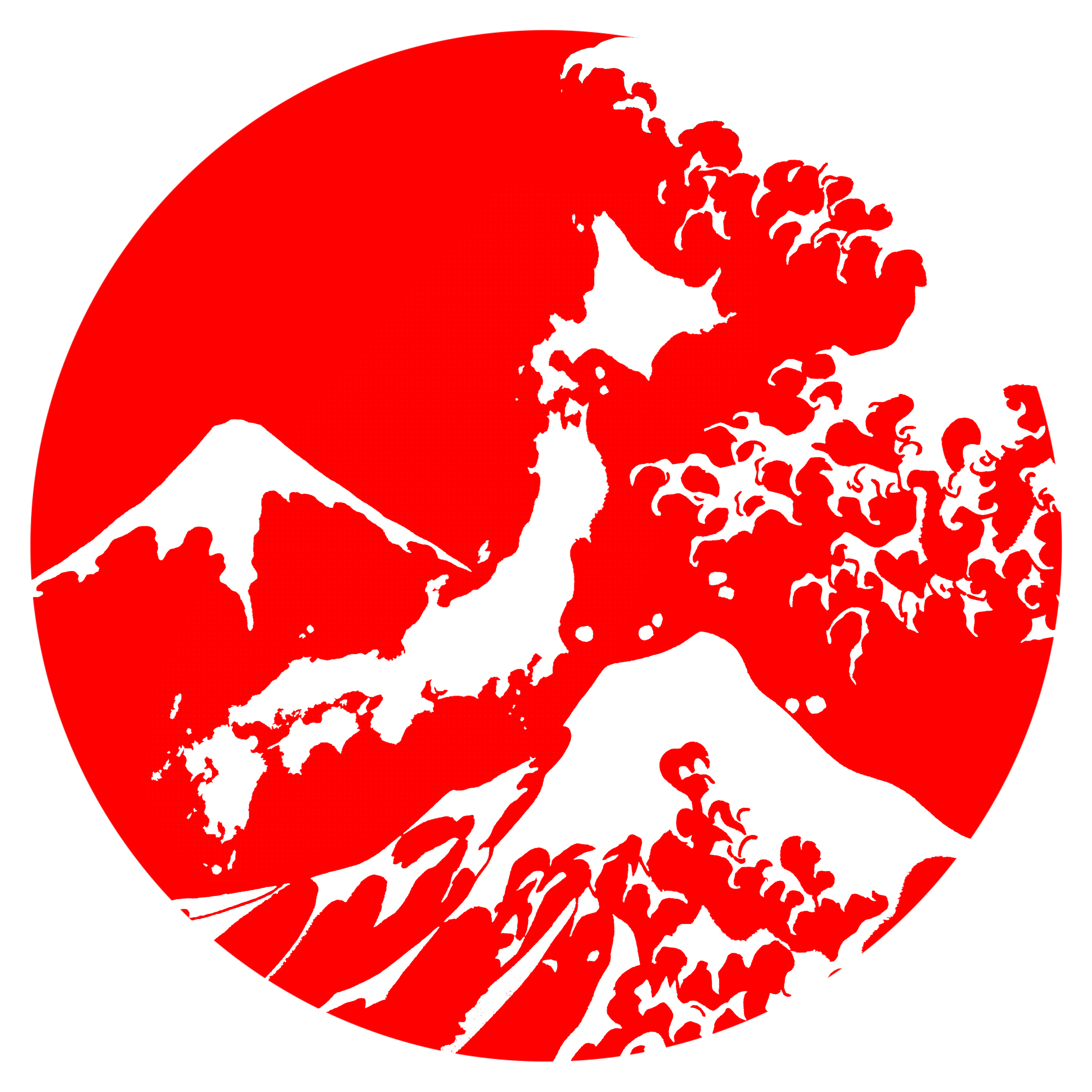
The west side of Kyoto has three of the city’s most recognizable sights, and the good news is they’re genuinely different from each other. Arashiyama is nature and temples on the western edge of the city. Kinkakuji is one building that earns every photo taken of it. The Imperial Palace grounds are a park as much as a historical site, and a good place to end the day. A Kyoto city bus day pass (¥700) connects all three without any backtracking.
Attraction 1: Arashiyama
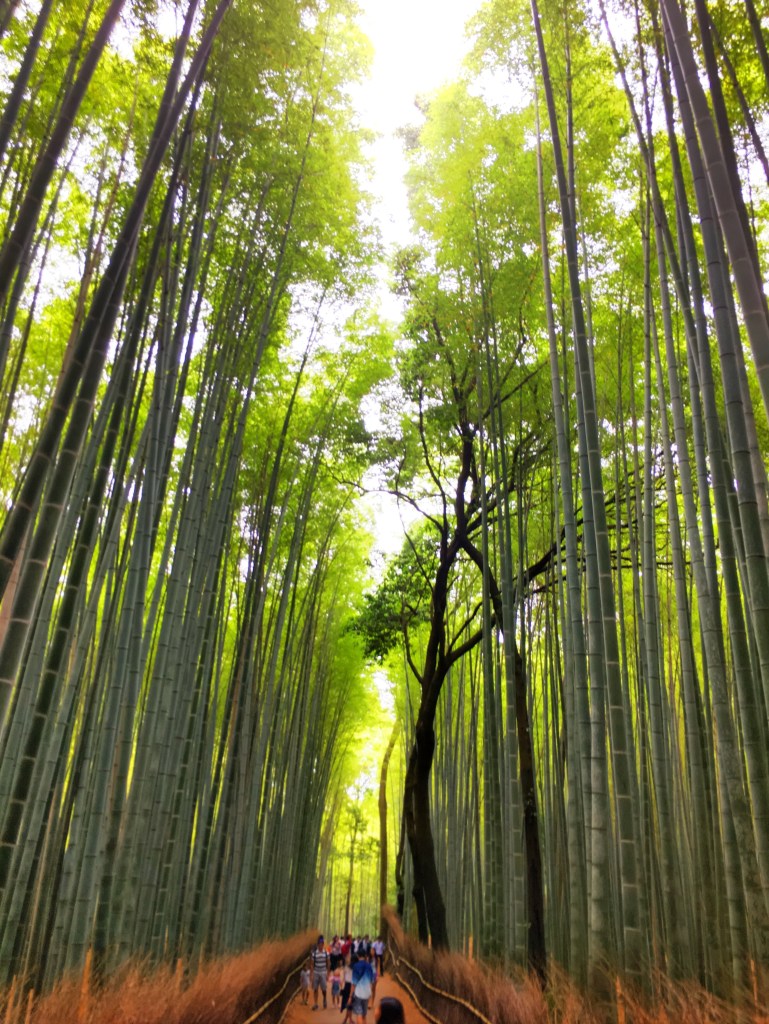
Arashiyama is worth a full morning, and one thing worth knowing upfront: the bamboo grove itself takes about 10 minutes to walk through. People are often surprised by how short it is. The grove is the reason to come, but the surrounding area is the reason to stay; the river, the temples, the teahouses, the mountain backdrop that changes completely with every season. Go early; the grove is crowded by mid-morning and the narrow path doesn’t give you anywhere to escape to.
The Togetsukyo Bridge crosses the Oi River with Arashiyama mountain behind it. Rental boats operate on the river and several restaurants have terrace seating over the water; a good place for a mid-morning break before moving on. The mountain behind the bridge is cherry blossoms in spring and reds and yellows in autumn; both are worth timing a visit around if you can.
Just next to the bamboo grove, Tenryuji Temple has one of the best traditional gardens in Kyoto, and it’s consistently overlooked by people rushing past to reach the bamboo. The garden frames Arashiyama mountain behind the pond in the way Japanese garden design is supposed to work. It’s quieter than it deserves to be, which is the best thing you can say about a Kyoto temple.
Admission details: Bamboo grove is free. Tenryuji garden ¥500, full temple grounds ¥800.
Attraction 2: Kinkakuji (Golden Pavilion)
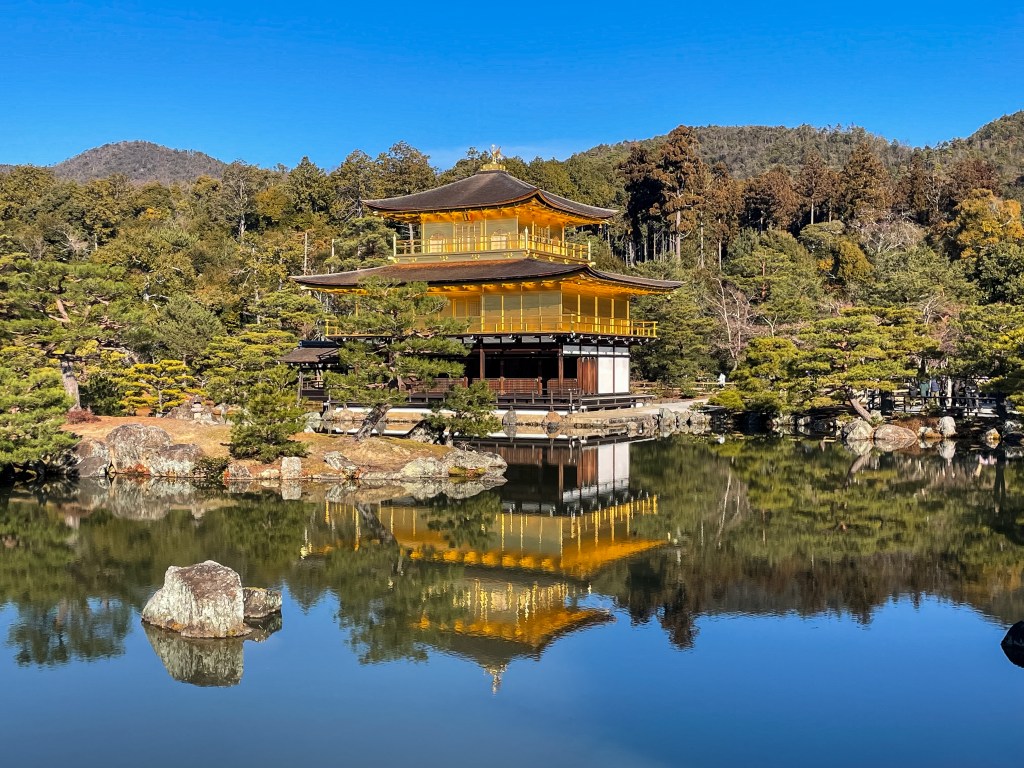
Kinkakuji is one of those sights that actually lives up to the hype. The top two floors are covered in gold leaf and the reflection in the pond in front of it is as good as advertised. It was built in 1397 as a retirement villa for shogun Ashikaga Yoshimitsu and converted to a Zen temple after his death. The current structure is a 1955 reconstruction; the original was burned by a disturbed monk in 1950, an act that inspired Yukio Mishima’s novel The Temple of the Golden Pavilion. If you’re interested in the story, read the novel before your visit; it makes standing in front of the building considerably more interesting.
The path around the grounds is one-way and takes about 30 to 40 minutes. It’ll be busy at almost any time of day; there’s no meaningful way to beat the crowds here the way you can at Fushimi Inari. Go, enjoy it for what it is.
Admission details: ¥500 for adults.
Attraction 3: Imperial Palace Grounds
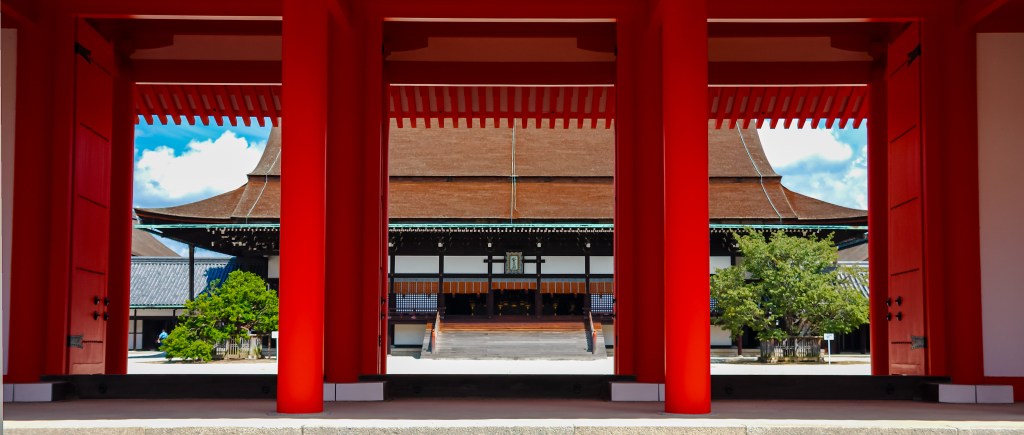
Most visitors to Kyoto skip the Imperial Palace entirely in favor of another temple, which is exactly why it’s worth going. The wide gravel paths, long stone walls, and pine trees give it a completely different character from the packed temple districts; it’s a park as much as a historical site, and Kyoto residents treat it like one. The surrounding Kyoto Gyoen National Garden is free, uncrowded by Kyoto standards, and genuinely pleasant at the end of an afternoon when the light is low and the earlier stops are still processing.
The palace buildings themselves require advance booking for a guided tour through the Imperial Household Agency; the same booking system as the Tokyo Imperial Palace. The exterior of the main gates and compound walls are visible without a tour and give a clear sense of the scale. If you want full interior access, book well ahead at kunaicho.go.jp.
Admission details: Kyoto Gyoen National Garden is free. Palace guided tours require advance reservation at kunaicho.go.jp.
Food: Obanzai
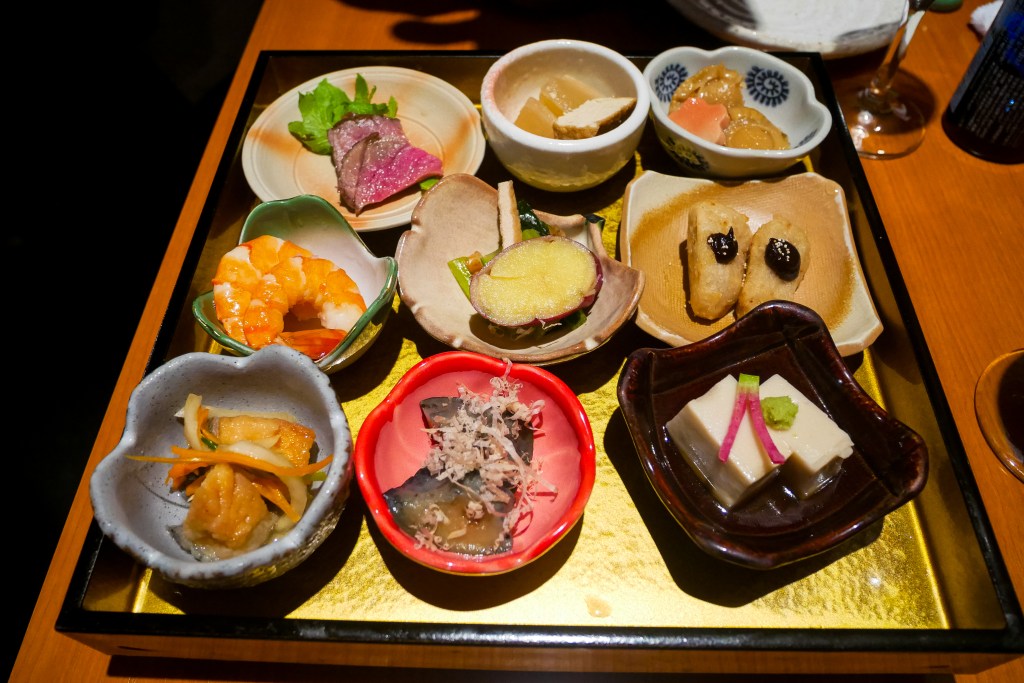
Obanzai is Kyoto’s everyday cuisine: small seasonal dishes based on vegetables, tofu, yuba (tofu skin), pickles, and fish. It’s the less formal version of kaiseki; the same emphasis on seasonality but without the ceremony or the price. Most obanzai restaurants present the day’s dishes in small pots behind a counter, and you choose what you want. The format is self-explanatory even without Japanese.
The streets around Shijo and Kawaramachi have a good range of options at different price points. Look for counter-style places where the food is visible from the door.
Extra Ideas
- Ryoanji Temple: Kyoto’s most famous rock garden; fifteen stones in raked gravel arranged so that at least one is always hidden from any viewing angle. The meaning is deliberately unresolved. A short bus ride from Kinkakuji and easy to combine into the same morning.
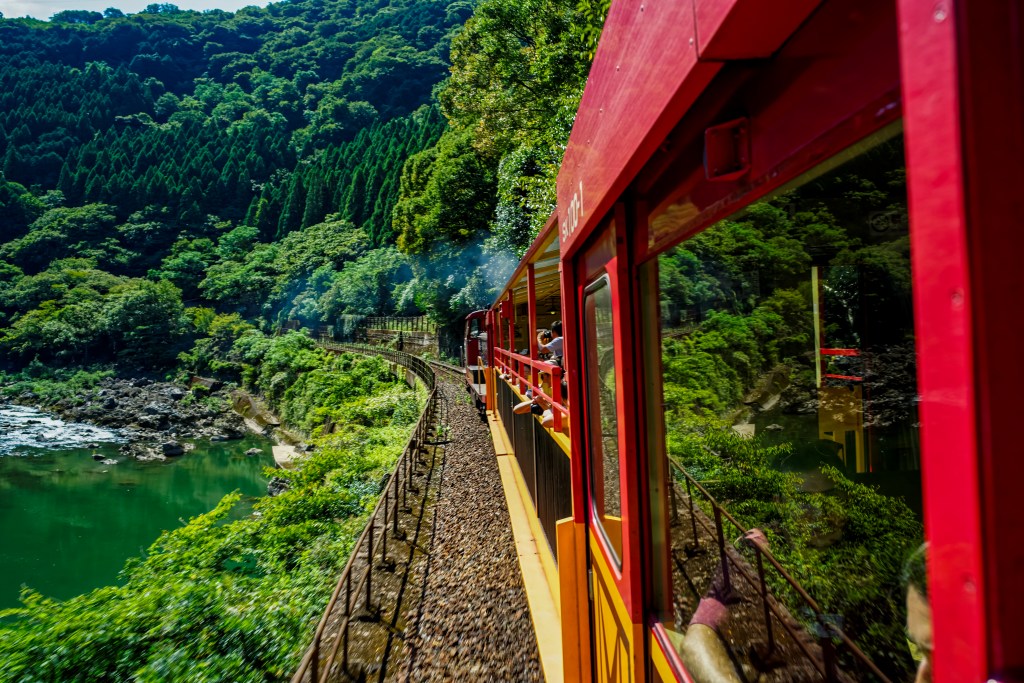
- Sagano Scenic Railway: A 25-minute train ride through the Hozu River gorge from Torokko Arashiyama to Torokko Kameoka. Book in advance; it sells out, especially in autumn.
- Iwatayama Monkey Park: A 20-minute climb above Arashiyama to a hillside where a troop of wild Japanese macaques live. The monkeys are fed inside a hut; visitors stay outside. The view over Kyoto from the top is one of the better ones in the city.
Raincheck (Bad Weather)
Kinkakuji and the Imperial Palace grounds lose a lot in heavy rain. For a serious washout:
- Kyoto Railway Museum: A large railway museum near Kyoto Station with steam locomotives, a working roundhouse, and a driving simulator. Entirely indoors and more interesting than it sounds even if trains aren’t your thing.
- Nishiki Market: Kyoto’s covered food market; 130 stalls selling pickles, fresh tofu, yuba, grilled skewers, and local specialties. Almost entirely covered and a legitimate rainy afternoon option.
- Kyoto International Manga Museum: A former primary school converted into a manga library with over 300,000 volumes to read on-site. Entirely indoors.
In Summary: Kyoto West Side
| Attraction 1 | Arashiyama: bamboo grove, Togetsukyo Bridge, Tenryuji Temple |
| Attraction 2 | Kinkakuji (Golden Pavilion) |
| Attraction 3 | Imperial Palace grounds & Kyoto Gyoen National Garden |
| Food | Obanzai in the Shijo/Kawaramachi area |
| Extra ideas | Ryoanji Temple · Sagano Scenic Railway · Iwatayama Monkey Park |
| Raincheck | Kyoto Railway Museum · Nishiki Market · Kyoto International Manga Museum |


.jpg)


Leave a Reply