
Kyoto has around 1,600 temples and shrines, but it’s a mistake to do a circuit around even the most famous ones. They’ll start to blur together and get boring. Instead, a day in Eastern Kyoto balances two famous but very different temples with a neighborhood walk that traverses them. Best of all, the three sites form a fun sequence that builds over the course of the day.
One practical note: Kyoto is best explored on foot and by bus, and a day pass (¥700) is worth buying at the station. The subway is better suited for cross-city trips but a solid option depending on where you’re staying.
Attraction 1: Fushimi Inari Taisha
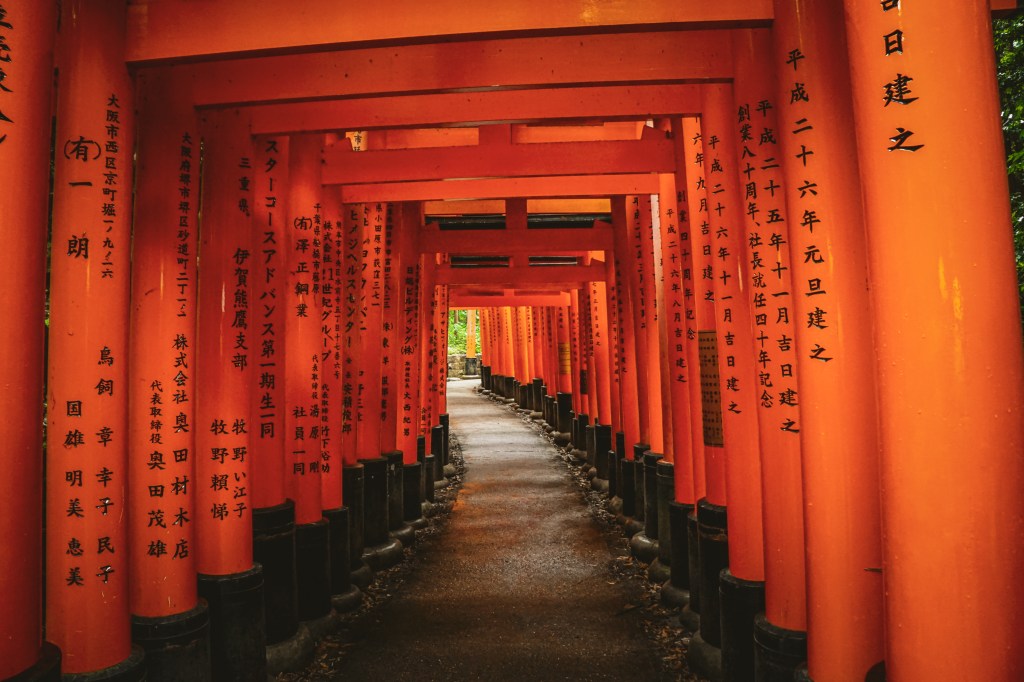
Fushimi Inari is unlike any other shrine in Japan. The main shrine complex at the base is interesting but not the point; the point is the network of thousands of vermilion torii gates that wind up the mountain behind it for four kilometers, donated over centuries by businesses and individuals as offerings to Inari, the deity of rice, sake, and prosperity. Walking through the gate tunnels is one of those experiences that works better in person than in any image you’ve seen of it, though Apple did use images of the winding gates in early “Shot on iPhone” poster ads.
The full circuit to the summit takes two to three hours. Most visitors reach the Yotsutsuji intersection, about halfway up, where the first clear views over Kyoto open up, and turn back. The path above Yotsutsuji gets quieter, more overgrown, and more atmospheric the higher you go; the summit feels genuinely remote despite being within city limits.
Go early or be ready for crowds. The lower gates are extraordinarily crowded by mid-morning; arriving at 7am or earlier means having long sections of the path nearly to yourself. The logic for the Toyosu fish auction applies here too — take advantage of your jetlag and beat the crowds.
Admission details: Free and open 24 hours. Fushimi Inari Station is on the JR Nara Line, two stops from Kyoto Station. Late evening is also a quiet option, though navigating the mountain paths in the dark requires a flashlight or phone torch.
Attraction 2: Higashiyama District Walk
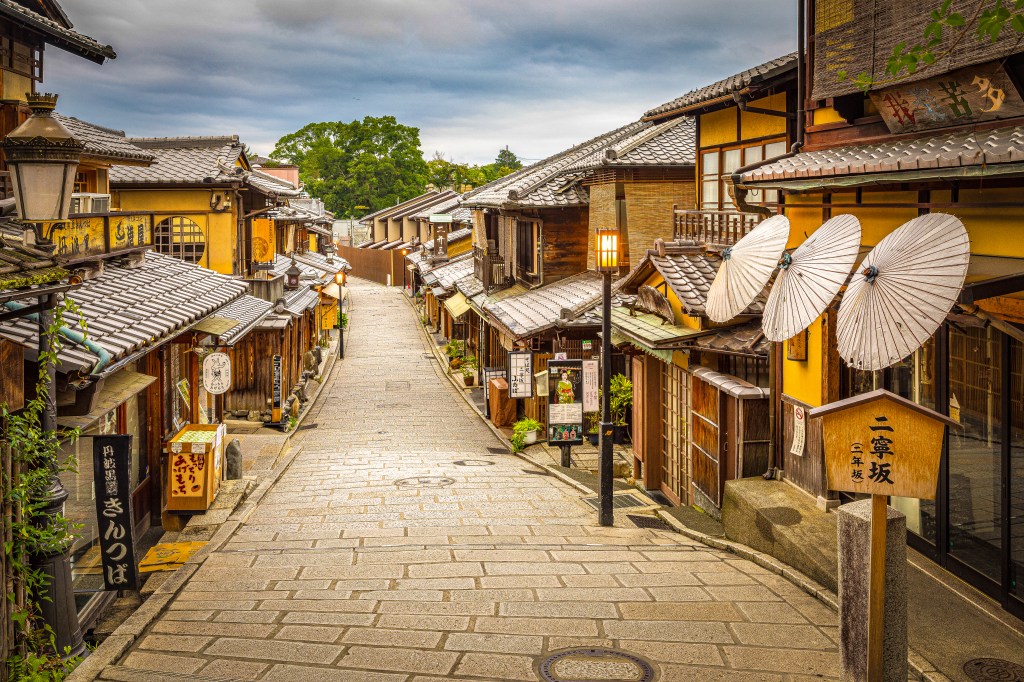
Higashiyama is Kyoto’s best-preserved historic district and the city’s most rewarding neighborhood walk. The route runs north from Kiyomizudera through Sannenzaka and Ninenzaka, two stone-paved pedestrian lanes lined with wooden merchant houses, craft shops, tea houses, and small restaurants, and continues through Maruyama Park and Chion-in toward Heian Shrine. The full walk takes two to three hours at a comfortable pace.
The lanes themselves are the attraction. The architecture is intact in a way that’s increasingly rare in Japan, and the scale is human; narrow enough that you’re always close to the buildings, the shopfronts, the small details. The shops along Ninenzaka and Sannenzaka sell everything from Kyoto ceramics and lacquerware to matcha soft serve and tourist souvenirs; the good stuff is there if you look past the obvious.
A few specific things worth pausing for: Kodai-ji Temple sits just off the main path and has one of the better rock gardens in Higashiyama, along with a bamboo grove that’s quieter than Arashiyama’s and better for it. Maruyama Park is Kyoto’s most famous cherry blossom spot, centered on a single enormous weeping cherry tree that draws thousands of people in late March and early April.
Note: Higashiyama is busy on weekends. Weekday mornings are considerably more pleasant. The lanes from Ninenzaka toward Kiyomizudera are the most crowded section; the stretch north through Maruyama Park toward Chion-in is noticeably quieter.
Admission details: The streets are free. Kodai-ji Temple is ¥600.
Attraction 3: Kiyomizudera Temple
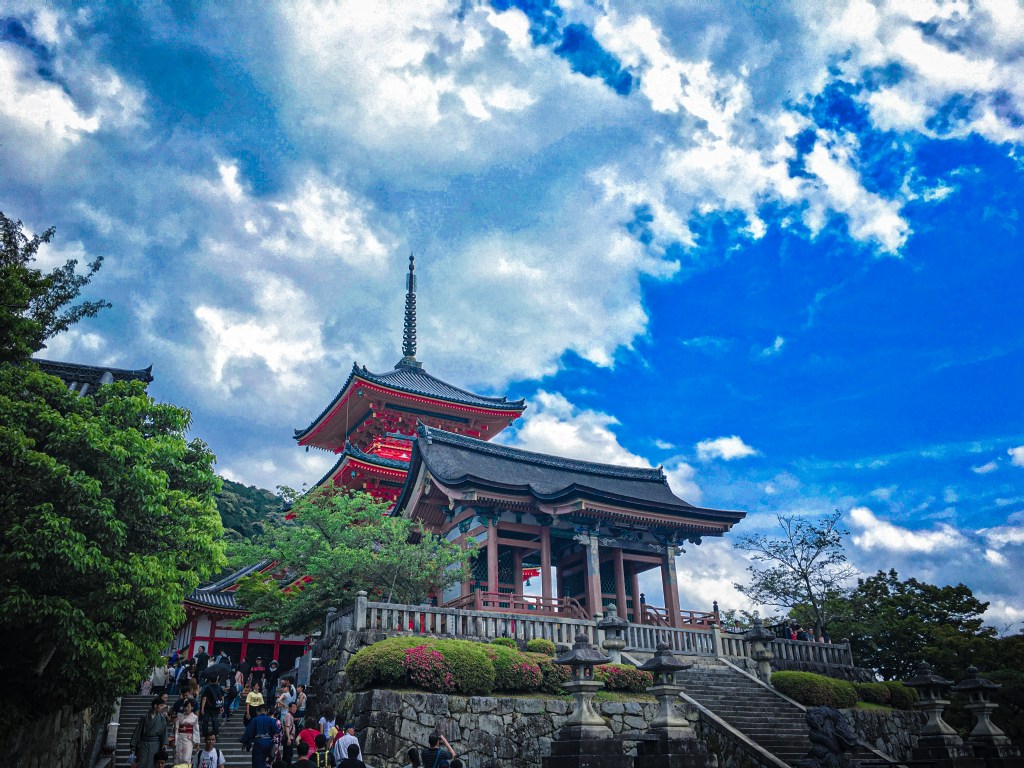
Kiyomizudera is Kyoto’s most visited temple and, despite that, one of its most rewarding. The main hall is built into a cliff face with a large wooden veranda, the butai (stage), projecting out over the hillside on a framework of 139 wooden pillars assembled without a single nail. The view from the stage over the forested valley and the city beyond is one of the defining Kyoto views, particularly in autumn when the hillside turns red and orange.
The temple complex is larger than it appears from the approach: the main hall connects to subsidiary halls, a three-story pagoda visible from the stage, and a waterfall (Otowa-no-taki) at the base where visitors drink from three streams said to bestow longevity, academic success, and luck in love respectively. The correct approach is not to drink from all three; that’s considered greedy.
The approach up Kiyomizu-zaka and Chawan-zaka (Teapot Lane) is lined with ceramic shops, yatsuhashi vendors, and souvenir stalls. Budget time for the climb up as well as the temple itself.
Admission details: ¥500 for adults. Open 6am to 6pm (extended hours during autumn and spring illumination events, when the temple stays open until 9pm and is transformed by floodlighting; worth timing a visit around if possible).
Food: Yatsuhashi
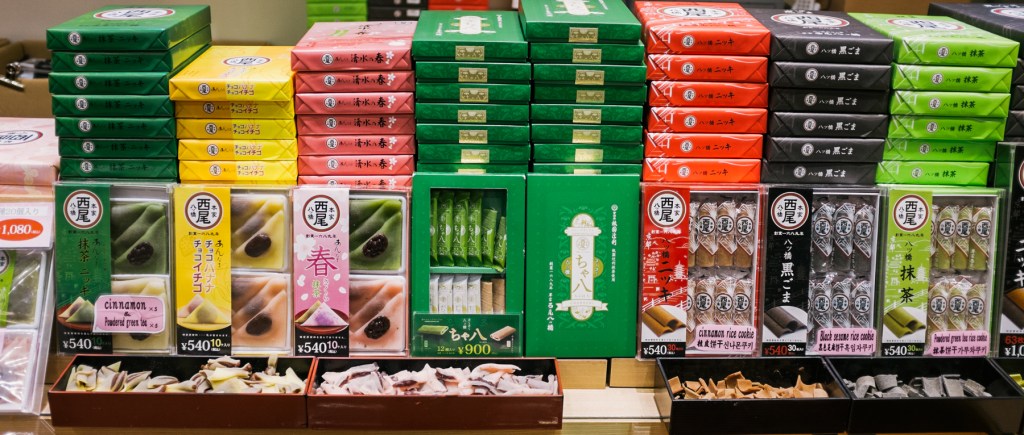
Yatsuhashi is Kyoto’s most iconic confection and one of the oldest continuously produced sweets in Japan. The baked version, thin and crisp with a slight cinnamon sweetness, has been made here since at least the 17th century. The unbaked version (nama yatsuhashi) is softer and chewier, folded into triangles around a filling of red bean paste or other flavors. Both are excellent and both are available from multiple shops along the Higashiyama walk and on the approach to Kiyomizudera; the fresh versions made on-site are better than anything sold pre-packaged.
Nishio Yatsuhashi and Izutsu Yatsuhashi are the two most established producers in the city. Try the cinnamon original before any of the more inventive flavors. Pair it with a matcha at one of the tea houses along Ninenzaka for a proper Kyoto afternoon break.
Extra Ideas
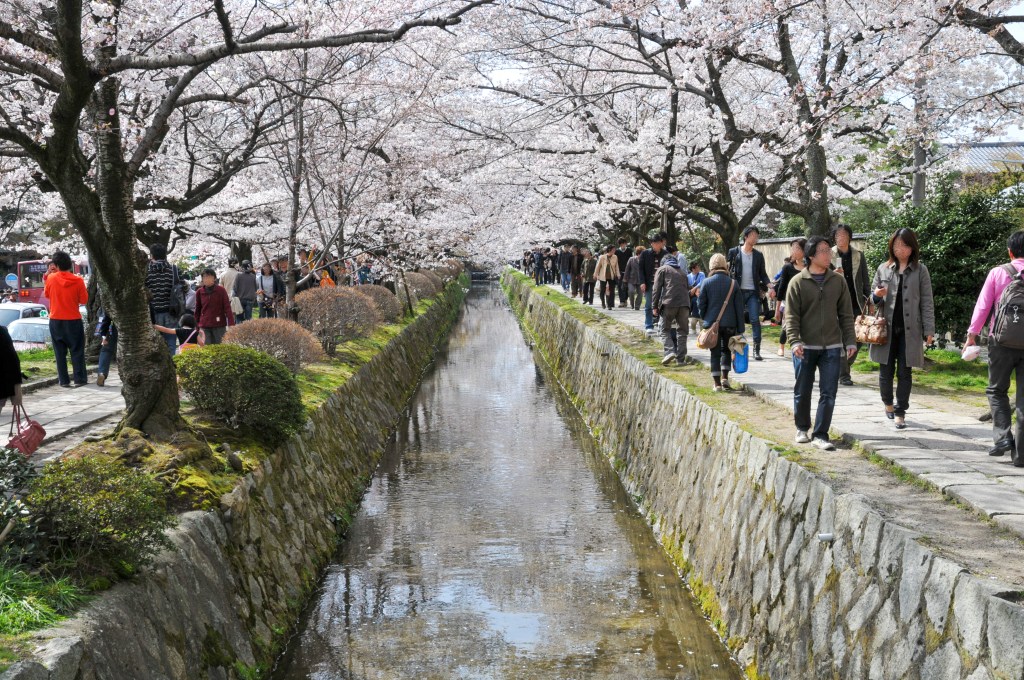
- Philosopher’s Path: A two-kilometer canal walk running north from Eikan-do to Ginkakuji (Silver Pavilion), lined with cherry trees and passing several smaller temples. Best in cherry blossom season but pleasant year-round as a quiet alternative to the busier Higashiyama streets.
- Gion district evening: The preserved machiya (wooden townhouse) streets of Gion, particularly Hanamikoji-dori, are at their best in the early evening when the lanterns are lit and the chance of seeing a geiko or maiko (Kyoto’s geisha) is highest. Don’t photograph them without permission.
- Heian Shrine: A large, relatively uncrowded shrine at the northern end of the Higashiyama walk with an exceptional stroll garden behind it. Often skipped in favor of more famous sites and better for it.
Raincheck (Bad Weather)
Higashiyama’s covered lanes are manageable in light rain and atmospheric in mist. Kiyomizudera loses something in heavy rain. For a serious washout:
- Kyoto National Museum: One of Japan’s premier art museums, a short walk from Kiyomizudera. The permanent collection covers Japanese art from prehistoric to Edo period and the rotating special exhibitions are frequently exceptional. Allow two to three hours.
In Summary: Kyoto East Side
| Attraction 1 | Fushimi Inari Taisha |
| Attraction 2 | Higashiyama district walk: Ninenzaka, Sannenzaka, Maruyama Park |
| Attraction 3 | Kiyomizudera Temple |
| Food | Yatsuhashi along the Higashiyama walk |
| Extra ideas | Philosopher’s Path · Gion district evening · Heian Shrine |
| Raincheck | Kyoto National Museum |


.jpg)

Leave a Reply